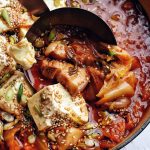
Pork Belly Kimchi Jjigae (Korean Kimchi Stew) recipe
Do you have old kimchi in your fridge? If so, it's time to make easy and delicious Kimchi Jjigae! A traditional Korean stew, the spicy broth, tender pork belly, and jiggly tofu make this an absolute favorite. As a bonus, it's so simple to make! The main ingredient is old kimchi. In fact, the older, the better! A staple of Korean home cooking that should be a part of your cooking rotation.
Servings: 6
Calories: 1051kcal
Equipment
- Large stock pot
Ingredients
- 3 cups kimchi old, well fermented, aged kimchi
- 1.5 lbs pork belly, cut into bite-sized chunks (they will shrink)
- 1.5 lbs pork bones (baby back pork ribs, pork riblets, leftover pork chop bones, etc.)
- 3 cups anchovy stock (or enough to cover)
- 1 heaping Tbsp gochujang
- 1 tsp sugar
- 1 package tofu
- 2 Tbsp sesame oil
- 2 Tbsp butter
- 1 green onion, chopped *optional garnish
- 1 Tbsp toasted sesame seeds *optional garnish
- dash or two fish sauce *optional
Instructions
- Saute kimchi. *Optional step if kimchi is not old enough or low quality.* In a large pot, add 1 tsp sesame oil + 1 tsp vegetable oil. Add kimchi and cook on medium heat until soft, caramelized, and the liquid is mostly evaporated, about 10-15 minutes.
- Simmer. Add pork belly, pork bones, anchovy broth (or water), and gochujang. Cover and bring to a boil. Lower heat and simmer until pork belly is jiggly and tender, pork riblets/ribs are falling off the bone, and the kimchi is cooked braised and soft, about 25-30 minutes.
- Add tofu. Cube tofu and add to the pot. Cover and simmer until heated through, about 5 minutes.
- Taste Kimchi Jjigae. If it tastes flat, add a dash or two of fish sauce and mix. If it's too acidic, add a pinch of sugar. If it tastes too raw, cook 10-15 minutes longer.
- Add sesame oil and butter. Add drizzle of sesame oil and butter. Garnish with green onion and sesame seeds.
- Serve and enjoy. Ladle into bowls and serve with rice. *If using leftover pork chop bones, don't forget to remove them before serving. Pork ribs and riblets can be served, as is.
Video
Notes
*How can you tell when kimchi is old? Old kimchi is dark red, almost orange in color. The leaves are soft and there's lots of juice. When you take a bite, it fizzes in your mouth. That sour, overly acidic taste tells you it's time for Kimchi Jjigae!
**Store leftovers in the fridge, tightly sealed, for 3-4 days. Reheats well.
Variations:
- Add udon noodles. Thick, chewy udon noodles add a very different texture. I buy frozen Sanuki or Shirakiku Udon noodles and keep on hand in the freezer.
- Add ramen noodles. Easy, inexpensive instant noodles give a texturally satisfying element.
- Make it vegan. Don't include the pork belly, pork bones, and fish sauce. And use vegan kimchi! For vegan kimchi stew, I recommend cooking down the kimchi to caramelize and intensify the kimchi flavor.
- Swap the protein. Instead of pork belly and pork bones, add your favorite protein of choice. Spam, beef brisket, canned tuna, and even chicken all taste great.
Nutrition
Calories: 1051kcal | Carbohydrates: 4g | Protein: 35g | Fat: 99g | Saturated Fat: 34g | Polyunsaturated Fat: 15g | Monounsaturated Fat: 42g | Trans Fat: 0.4g | Cholesterol: 182mg | Sodium: 448mg | Potassium: 585mg | Fiber: 2g | Sugar: 2g | Vitamin A: 202IU | Vitamin C: 1mg | Calcium: 140mg | Iron: 4mg