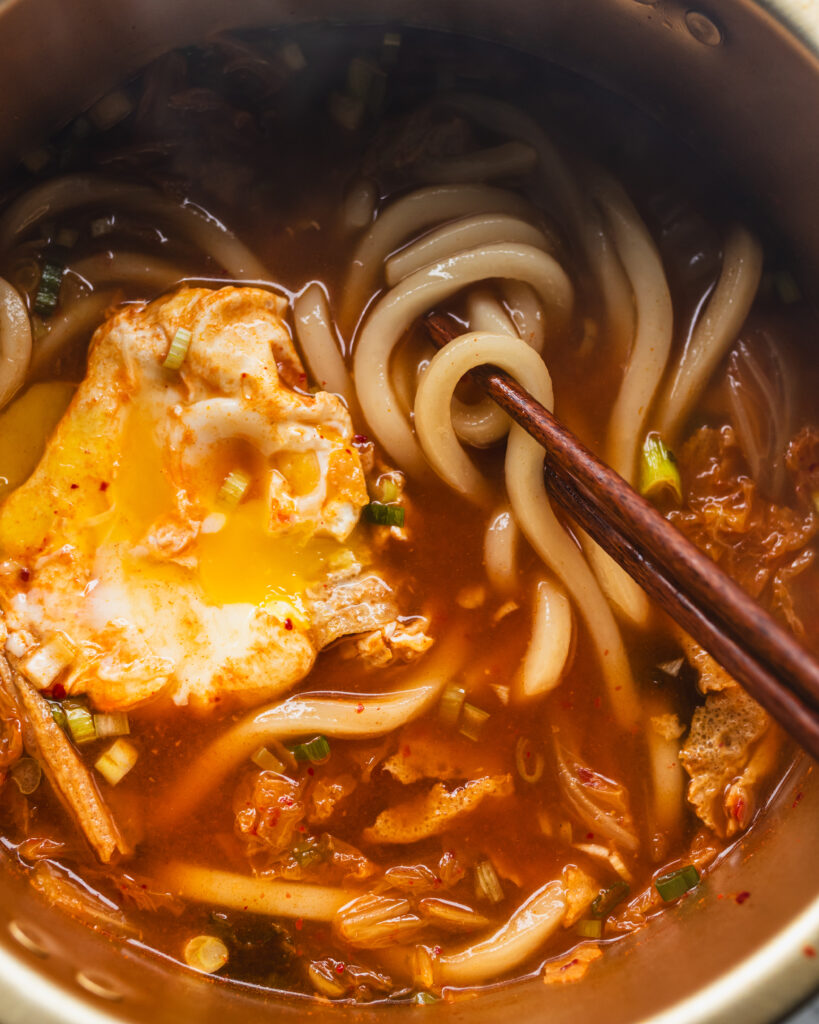
An easy and delicious udon recipe made in 10 minutes: Kimchi Udon Soup! Thick and chewy udon noodles and a spicy broth flavored with Korean kimchi. The hot broth is mildly spicy and filled with umami flavor! For extra protein, poach an egg directly into the broth. If you have it, fried beancurd (or yubu) is a nice touch. A weeknight superhero and the perfect bowl of comfort!

What is Kimchi Udon Soup?
Kimchi Udon Soup is an easy Asian soup featuring thick and chewy udon noodles and a savory broth flavored with kimchi. The kimchi adds a spicy kick of flavor to an otherwise mild broth. Delicious and simple to make, it only takes 10 minutes to put on the table.
I love Udon Noodle Soups because they make a great quick meal. All you need is a savory, umami-forward broth and frozen udon noodles. Both of these can be made with pantry ingredients.
More udon noodle recipes: Udon Noodle Soup and Curry Udon.
For the noodles, use Sanuki frozen udon noodles. The flavor and chewy texture is the same as fresh udon noodles, in my humble opinion. They are pre-cooked and do not need to be cooked in a separate pot. Simply add them to the hot broth and use tongs to separate the noodles as they defrost.
For the broth, use a combination of instant dashi powder, soy sauce, and OLD kimchi. Together they will create a savory broth that is full of flavor. The kimchi, especially, adds so much umami and heat!
More dishes with Kimchi: Kimchi Stew, Braised Kimchi with Tofu and Pork Belly, Kimchi Pancake, Kimchi Pork Rice Bowl and Kimchi Fried Rice. Or check out my guide: 20 Easy Recipes with Kimchi.
This easy recipe is soothing and comforting. Thick udon noodles in a savory kimchi spiked broth. The ultimate comfort food! Perfect for one portion. And easy enough to multiply and feed a family.
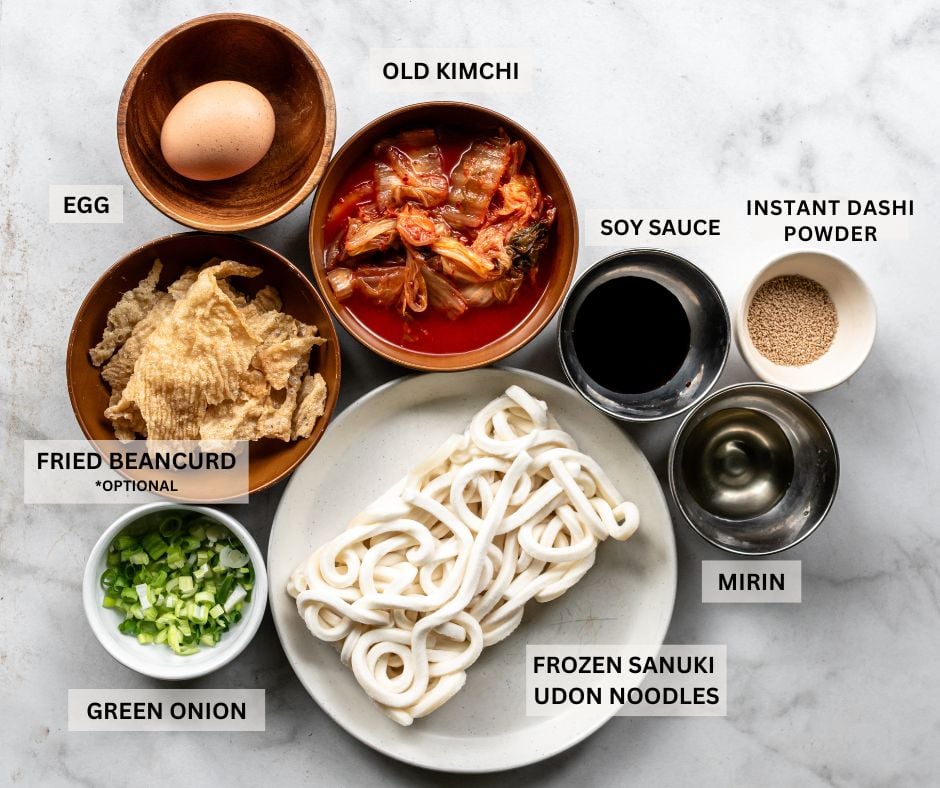
Ingredients:
- Udon Noodles. Thick and chewy udon noodles are the star ingredient. I recommend frozen Sanuki style udon noodles from Asian markets. They have the best texture and flavor. Look for them in the freezer section. (FYI: Udon noodles come in 3 forms: dried, packaged in water, and frozen).
- Old Kimchi. Use old kimchi for extra flavor. A little kimchi juice is ok but not too much or it will be too acidic.
- Soy Sauce + Mirin. The combination adds flavor and aroma. Mirin is Korean sweet cooking wine. If you don’t drink alcohol, leave it out.
- Instant Dashi Powder. I use Hondashi (affiliate), which is a Japanese bonito soup stock. It will instantly dissolve in the water and add deep flavor.
- Egg. Poach an egg by adding it directly into the hot broth. Add at the end of the cooking process to prevent overcooking.
- Fried Beancurd or Yubu. A classic ingredient in Japanese Udon Soup. Adds flavor and protein. They are tofu skins that have been deep-fried. In Korean and Japanese cuisine, they are called yubu. In Chinese cuisine, they are added to hot pot and come in stiff rolls or sheets. Look for them in the refrigerated section at the Asian grocery store next to the tofu.
- Green onion. *Optional, for garnish.
How to make Kimchi Udon Noodles:
- Make broth. In a small pot, add cold water, dashi powder, soy sauce, mirin, and kimchi. If using, add the fried beancurd or yubu as well. Bring to a boil over medium heat, then lower the heat and simmer until the kimchi has softened and the flavors have melded, about 3-4 minutes.
- Add frozen noodles. Turn up the heat to medium. When the broth is bubbling, add the frozen udon noodles. Gently loosen the noodles with tongs as they defrost in the hot broth, about 2 minutes.
- Poach egg. When the noodles are loose, it’s time to cook the poached egg directly into the broth. Crack an egg into a small ramekin or bowl. Add the raw egg to the center of the bubbling broth. Close tightly with a lid and lower the heat to medium-low. Cook until the egg is poached to your liking. For me, 2 minutes leaves the perfect runny poached egg.
- Serve. Garnish with green onions and serve immediately. Enjoy!
PRO Tips:
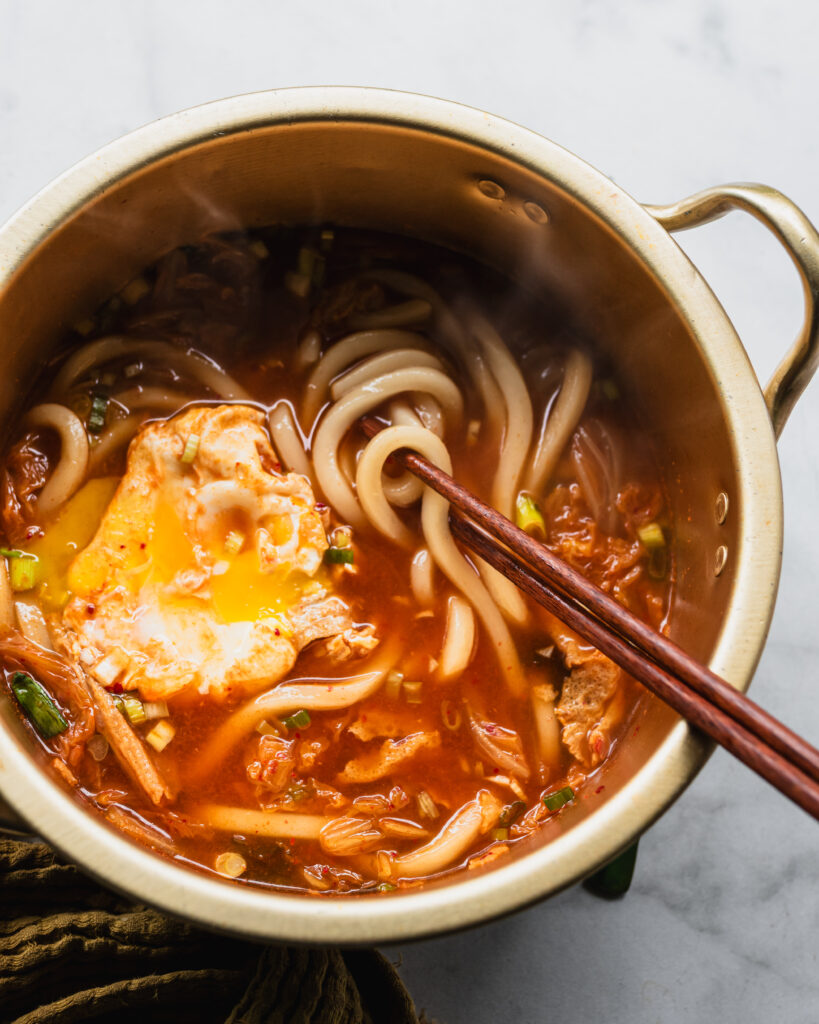
- Cook in a Korean ramen pot. For one portion, use a Korean ramen pot (affiliate). It is made from aluminum and heats up very quickly. It makes it very easy to transfer from stovetop to table.
- Use OLD kimchi. This is the perfect recipe for the old kimchi in the back of your fridge. When cooked, aged kimchi tastes deeply delicious and adds so much flavor to the broth. New kimchi won’t taste as good.
- Swap with coconut milk. For a creamy kimchi udon, swap the water with a can of coconut milk. Note: one can of coconut milk (400ml, 13.5oz) measures 1 3/4 cup of coconut milk. Top off with 1/4 cup of water to make 2 cups of liquid.
- Do not overcook the noodles. To keep the texture of the bouncy udon noodles, be careful not to overcook. The frozen Sanuki-style udon noodles are pre-cooked and only need a few minutes to achieve the right chewy texture.
- Adjust spice level. Kimchi Udon is mildly spicy. To increase the spice level, add 1 Tbsp of Gochujang or Korean hot pepper paste to the broth. To make it less spicy, add less kimchi.
- Make a larger portion. For more than one serving, use a larger cooking pot. Multiply the ingredients and cook in one pot. To serve, divide the cooked noodles, poached eggs, and broth equally among bowls.
FAQ
The best way to determine if your kimchi is old enough is to taste it. Old kimchi does not taste good as is. It is too sour and almost unpleasant to eat. Sometimes, it can “fizz” in your mouth from being overly fermented. It is dark red or dark orange. It is very juicy and soft.
A stone pot, clay pot, or individual-sized cooking vessel would also work. Or, use a medium saucepan and transfer to a serving bowl.
More recipes with Kimchi:
- Cheesy Kimchi Fried Rice (Kimchi Bokkeumbap)
- Triangle Rice Balls with Cheese (Samgak Jumeok Bap)
- Korean Spicy Cold Noodles with Kimchi (Bibim Guksu)
- Easy Kimchi Stew with Pork Belly + Tofu (Kimchi Jjigae)
Easy Kimchi Udon Soup Recipe
Equipment
- 1 Korean ramen pot or medium saucepan
- small ramekin or small bowl
- tongs
Ingredients
- 2 cups water
- 1/2 cup kimchi *preferably OLD kimchi
- 1/2 Tbsp instant dashi powder *I use Hondashi
- 1 Tbsp soy sauce
- 1 Tbsp mirin
- 1 block frozen Sanuki udon noodles
- 1 egg
- 1 green onion *chopped
- 1 fried bean curd *optional
Instructions
- Make broth. In a small pot, add cold water, dashi powder, soy sauce, mirin, and kimchi. If using, add the fried beancurd or yubu as well. Bring to a boil over medium heat, then lower the heat and simmer until the kimchi has softened and the flavors have melded, about 3-4 minutes.
- Add frozen noodles. Turn up the heat to medium. When the broth is bubbling, add the frozen udon noodles. Gently loosen the noodles with tongs as they defrost in the hot broth, about 2 minutes.
- Poach egg. When the noodles are loose, it's time to cook the poached egg directly into the broth. Crack an egg into a small ramekin or bowl. Add the raw egg to the center of the bubbling broth. Close tightly with a lid and lower the heat to medium-low. Cook until the egg is poached to your liking. For me, 2 minutes leaves the perfect runny poached egg.
- Serve. Garnish with green onion and serve immediately. Enjoy!
Video
Notes
-
- Cook in a Korean ramen pot. For one portion, use a Korean ramen pot (affiliate). It is made from aluminum and heats up very quickly. It makes it very easy to transfer from stovetop to table.
-
- Use OLD kimchi. This is the perfect recipe for the old kimchi in the back of your fridge. When cooked, old kimchi tastes deeply delicious and adds so much flavor to the broth. New kimchi won’t taste as good in the broth.
-
- Swap with coconut milk. For a creamy broth, swap the water with a can of coconut milk. Note: one can of coconut milk (400ml, 13.5oz) measures 1 3/4 cup of coconut milk. Top off with 1/4 cup of water to make 2 cups of liquid.
- Do not overcook the noodles. To keep the texture of the bouncy udon noodles, be careful not to overcook. The frozen Sanuki-style udon noodles are pre-cooked and only need a few minutes to achieve the right chewy texture.
-
- Make a larger portion. For more than one serving, use a larger cooking pot. Multiply the ingredients and cook in one pot. To serve, divide the cooked noodles, poached eggs, and broth equally among bowls.


This came out delicious! Super simple and easily customized. For instance, I added a little bit of tofu, some napa cabbage, and some enoki mushroom. The broth was perfection – sour and spicy but not crazy hot. My husband absolutely loved this! Definitely a keeper that will be wonderful to enjoy over and over this winter. Thank you!!!