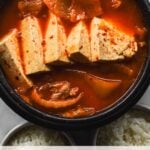
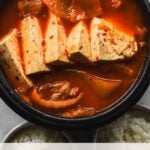
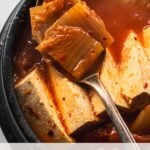
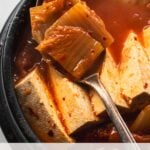
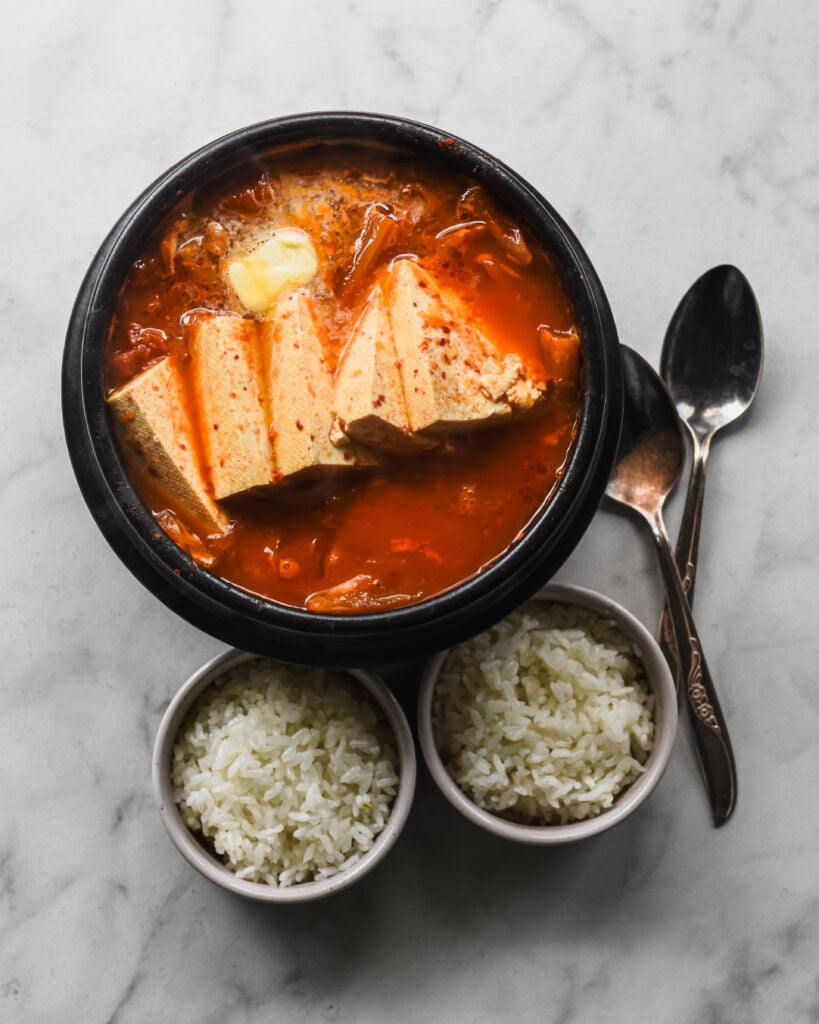
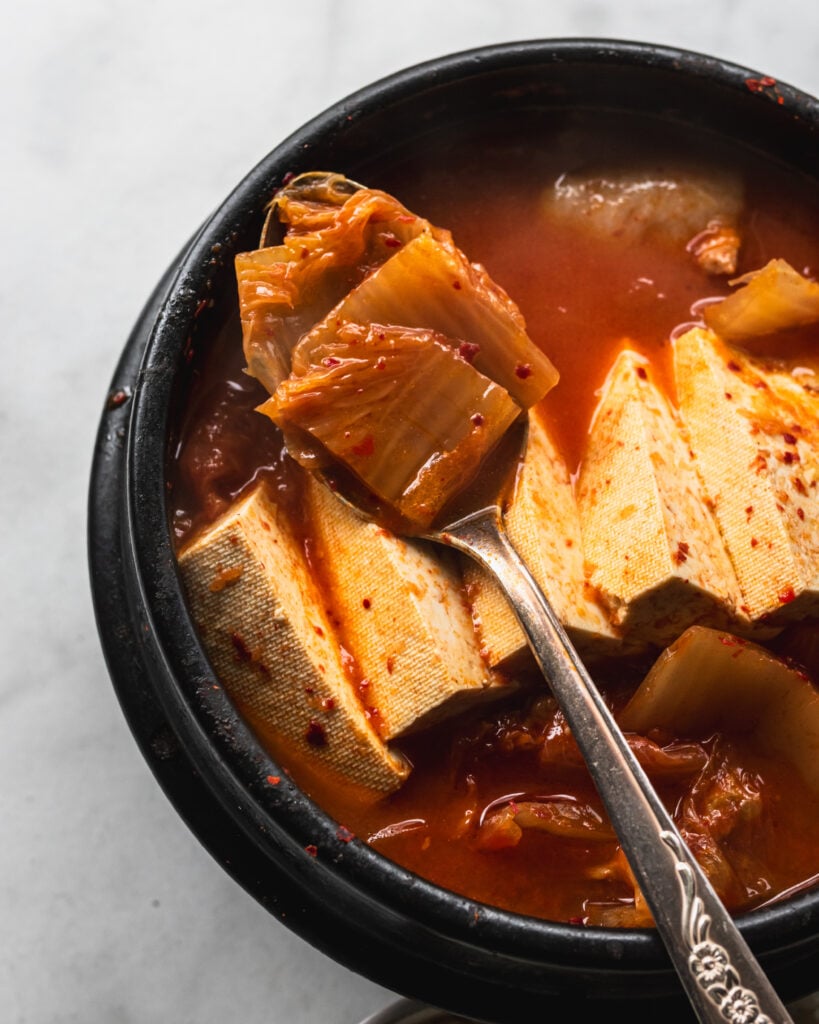
An easy recipe for that jar of old kimchi sitting in the back of your fridge: Kimchi Jjigae! A Korean Kimchi Stew that is spicy, tangy, and mouthwateringly delicious. Tender chunks of pork and tofu make this soup a complete meal in one pot. Serve with a bowl of white rice for the ultimate Korean comfort food!

What is Kimchi Jjigae?
Kimchi Jjigae is a spicy and savory Korean stew made with kimchi. Also known as Kimchi Stew, it’s a classic Korean dish that takes advantage of old kimchi that’s too sour to be eaten as a side dish. In Korean cuisine, it’s a traditional dish and every home cook has their own way of making it.
Don’t be intimidated to make this soup at home. Truthfully, Kimchi Jjigae is very easy to make. A weeknight friendly dinner with minimal ingredients. Leftovers taste even better the next day and freeze well, too.
They key to a delicious kimchi jjigae is the broth. To achieve a spicy broth with great flavor and complexity, I recommend a combination of anchovy broth and pork bones.
Anchovy broth is the backbone of Korean cooking and adds umami richness and deep flavor. You can’t exactly pinpoint the taste, but it makes a huge difference in flavor. Make your own Anchovy broth or use Anchovy Broth Coins to make it easier. (Anchovy Broth Coins are concentrated anchovy stock in tablet form that melt easily in hot liquid.)
Pork bones also add body and rich flavor to the broth. Any kind works, like pork riblets or spare pork ribs. Again, you can’t exactly pinpoint the taste but it gives that homey, cozy, made-by-your-Korean-grandma flavor.
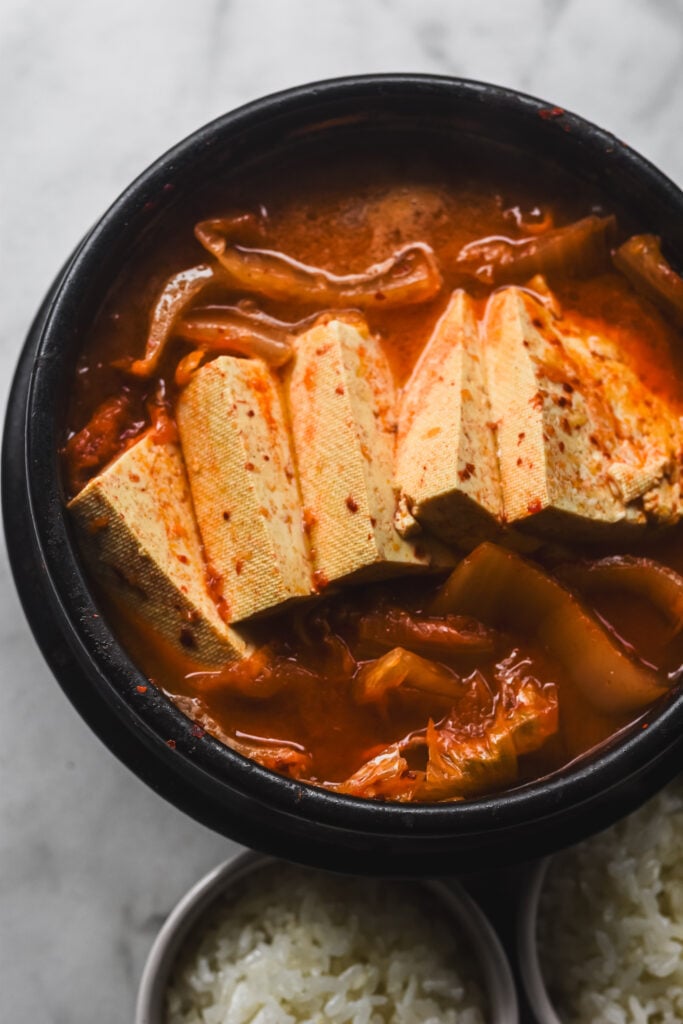
Enjoy as a simple meal with a side of rice or Korean Purple Rice. If you like, add side dishes to make it a bigger meal, like Korean Pumpkin Salad, Marinated Perilla Leaves, or Korean Broccoli Side Dish.
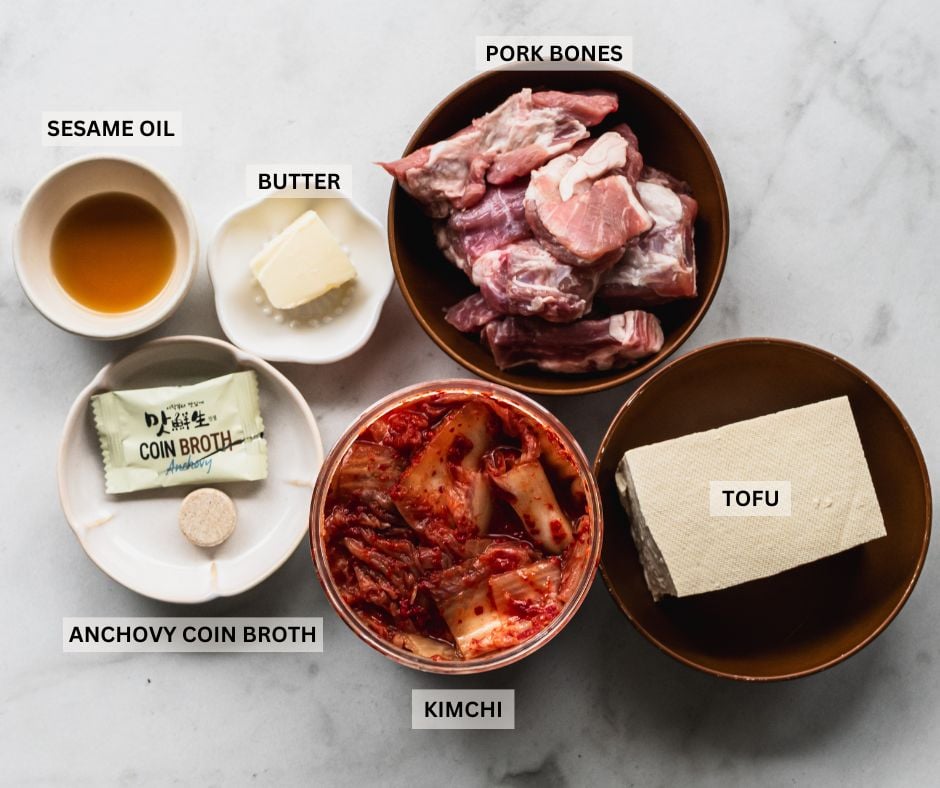
Ingredients
- Kimchi. A traditional Korean dish made of fermented Napa cabbage seasoned with gochukaru (chili flakes), ginger, garlic, and seafood (fish sauce, fermented shrimp paste). Spicy, acidic, savory, and incredibly delicious.
For the BEST kimchi stew, use aged kimchi that is well fermented and overly sour. Old kimchi is juicy, dark red, and fizzes in your mouth. It’s too sour to eat on its own.
- Pork Bones. The best flavor comes from pork bones. The flavor and collagen that comes out of the bones makes the broth extra tasty and rich. Look for small cuts of pork with bone still attached, like pork riblets or diced pork spare ribs. Even pork ribs or bone-in pork chops work well. *If using a pork chop, chop up the meat into chunks and place in the cooking pot alongside the bone with meat still attached.
- Anchovy Broth Coin. Similar to chicken bouillon, it’s a tablet made of concentrated anchovy broth. A quick and convenient way to get the flavor of Anchovy broth instantly. Add to water and it will melt into the liquid as it cooks. Look for them at the Korean grocery store and store in the fridge. (Can be swapped with vegetable broth or chicken broth).
- Tofu. Absorbs all the flavor of the spicy kimchi broth like sponges. Cuts through the tangy richness and adds heft and body to the soup. Soft Tofu or Medium Tofu recommended.
- Butter + Sesame Oil. The finishing touches. A little pat of butter and a drizzle of sesame oil adds richness and savory depth. An excellent balance to all that tangy spice.
How to make Korean Kimchi Stew
- Assemble ingredients. In a Korean earthenware pot (or medium saucepan), add kimchi, pork bones, water, and anchovy broth coin. The water should just cover the kimchi and pork.
- Cook. Bring to a boil over medium-high heat then lower to medium heat. The water should be bubbling somewhat vigorously with bubbles breaking the surface. Simmer until the pork is tender and the oil is pooling at the surface of the broth, about 20 minutes. Give it a stir from time to time so it doesn’t stick to the bottom.
- NOTE: if the water evaporates too much, add more water so it’s level with the same amount of liquid you started with.
- Add tofu. Drain the tofu and cut into 1-inch slices. Add to the bubbling stew and press with the back of a spoon to submerge partially into the broth. Spoon the broth over the tofu to help it to absorb the flavors. Cook until the tofu is warmed through, another 2-3 minutes.
- Serve. Turn off the heat. Garnish with a little butter and small drizzle of sesame oil. Serve immediately, while it’s still bubbling hot, with rice and other side dishes, if you like. Enjoy!
PRO Tips
- Use OLD Kimchi! The older the kimchi, the better the kimchi jjigae. Save this recipe for when your kimchi has become overly sour.
- Cook until the oil pools at the top. The spicy broth will have deeper flavor if cooked long enough for the fat to render out of the pork. There’s lots of flavor that comes out of the pork bone, collagen, and connective tissue. Look for pooling oil that sits on the broth’s surface, which tells you it’s cooked long enough. My Korean grandma’s secret for the best Kimchi Jjigae.
- Use a Korean earthenware pot. If you have one, use a Korean clay pot. They keep the stew bubbling hot. They are also easy to transfer from stovetop to table, creating less dirty dishes.
- Double or triple the amounts. Easily doubles or triples. Simply increase the ingredient amounts and use a large pot.
Variations
There are so many ways to eat and enjoy Kimchi soup. A few variations:
- Pork Belly Kimchi Jjigae. Rich and decadent with jiggly bites of fatty pork belly.
- Tuna Kimchi Stew (Chamchi Kimchi Jjigae). A leaner version made with canned tuna.
- Kimchi Soondubu Jjigae (recipe coming soon). An individual size portion with soft silken tofu. The soft clouds of tofu melt into the broth for the ultimate soft texture.
- Kimchi Udon Noodle Soup
Or, add ramen noodles and even Korean rice cakes (tteok) to change it up!
FAQ
Leftover Kimchi Stew can be stored in an airtight container in the fridge for 3-5 days.
Old kimchi is extremely acidic. When cooked, the acidity “mellows” out and leaves a full-bodied, complex flavor that cannot be replicated with fresh or slightly ripe kimchi.
Technically, kimchi does not go bad. But if your kimchi has mold or a slimy, mushy texture, it’s no longer good to eat. Generally, kimchi can last 3-6 months and even up to a year. Some Korean restaurants even advertise using 2-year old kimchi (prized for its complex, deep flavor) but it’s stored in very specific conditions.
Yes, you can make Kimchi Jjigae with fresh kimchi or slightly ripe kimchi. However, it won’t taste as good. I recommend using kimchi that’s at least 2-3 months old for best flavor.
Yes, Kimchi Stew freezes well. Cool completely and transfer to an airtight container. Freeze for up to 1 month.
More to explore
- Korean Food for Beginners
- Easy Asian Dinners
- 7 Easy Recipes with Gochujang
- What to do with Kimchi: 20 Easy Recipes
- Kimchi Pork Rice Bowls
Easy Kimchi Jjigae (Beginner Friendly Korean Kimchi Stew) recipe
Equipment
- 1 Korean earthenware pot (1000ml) *or medium saucepan
Ingredients
- 1 1/2 cups/ 250 grams kimchi *old, sour kimchi preferred
- 1/2 lbs/ 250 grams pork riblets or spare pork ribs *baby back pork ribs or pork chops with bone attached can also be used
- 1 1/2 cups water
- 1 anchovy broth coin
- 1/2 carton/ 240 grams tofu *soft or medium tofu
- 1/2 Tbsp unsalted butter
- 1 tsp sesame oil
Instructions
- Assemble ingredients. In a Korean earthenware pot (or medium saucepan), add the pork bones, kimchi, water, and anchovy broth coin. The water should just cover the kimchi and pork.
- Cook. Bring to a boil over medium-high heat then lower the heat to medium. The water should be bubbling somewhat vigorously with bubbles breaking the surface. Simmer until the pork is tender and the oil is pooling at the surface of the broth, about 20-25 minutes. Give it a stir from time to time so it doesn't stick to the bottom.
- NOTE: if the water evaporates too much, add more water so it's level with the same amount of liquid you started with.
- Add tofu. Drain the tofu and cut into 1-inch slices. Add to the bubbling stew and press with the back of a spoon to submerge partially into the broth. Spoon the broth over the tofu to help it to absorb the flavors. Cook until the tofu is warmed through, another 2-3 minutes.
- Serve. Turn off the heat. Garnish with a little butter and small drizzle of sesame oil. Serve immediately, while it's still bubbling hot, with rice and other side dishes, if you like. Enjoy!
Video
Notes
- Use OLD Kimchi! The older the kimchi, the better the kimchi jjigae. Save this recipe for when your kimchi has become overly sour.
- Cook until the oil pools at the top. The broth will have deeper flavor if cooked long enough for the fat to render out of the pork. There’s lots of flavor that comes out of the pork bone, collagen, and connective tissue. Look for pooling oil that sits on the broth’s surface, which tells you it’s cooked long enough. My Korean grandma’s secret for the best Kimchi Jjigae.
- Double or triple the amounts. Easily doubles or triples. Simply increase the ingredient amounts and use a larger pot.