A starter pack of 10 Easy Korean recipes for beginners. If you love Korean food and want to cook more Korean dishes at home, these helpful tips and recipes will help you get started!
Introduction
Korean food can feel intimidating at first. Fermented ingredients, unfamiliar names, and a whole new pantry. But truthfully, some of the easiest and most satisfying meals I cook are Korean.
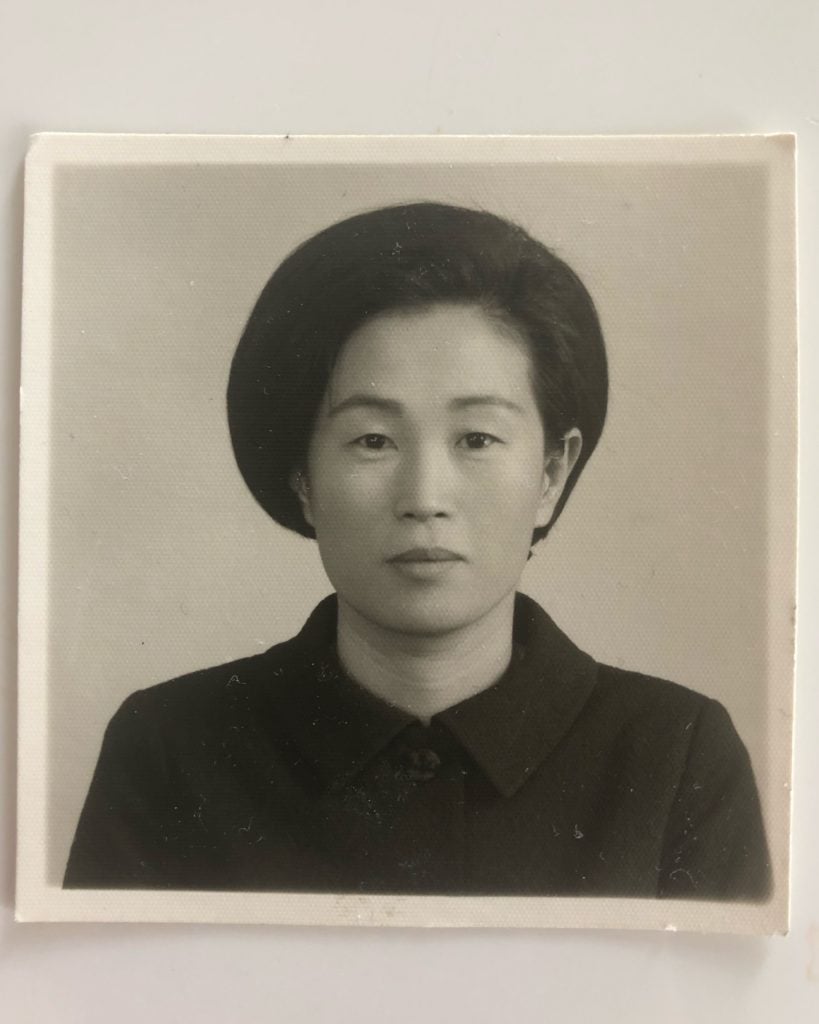
As a Korean American, I grew up in my Halmoni’s (Korean grandmother’s) kitchen. She was an amazing home cook and I learned how to make Korean food by cooking and eating together with her. Halmoni showed me that Korean home cooking can be simple, delicious, and healthy.
If you’re new, start here:
My Favorite Beginner Meals:
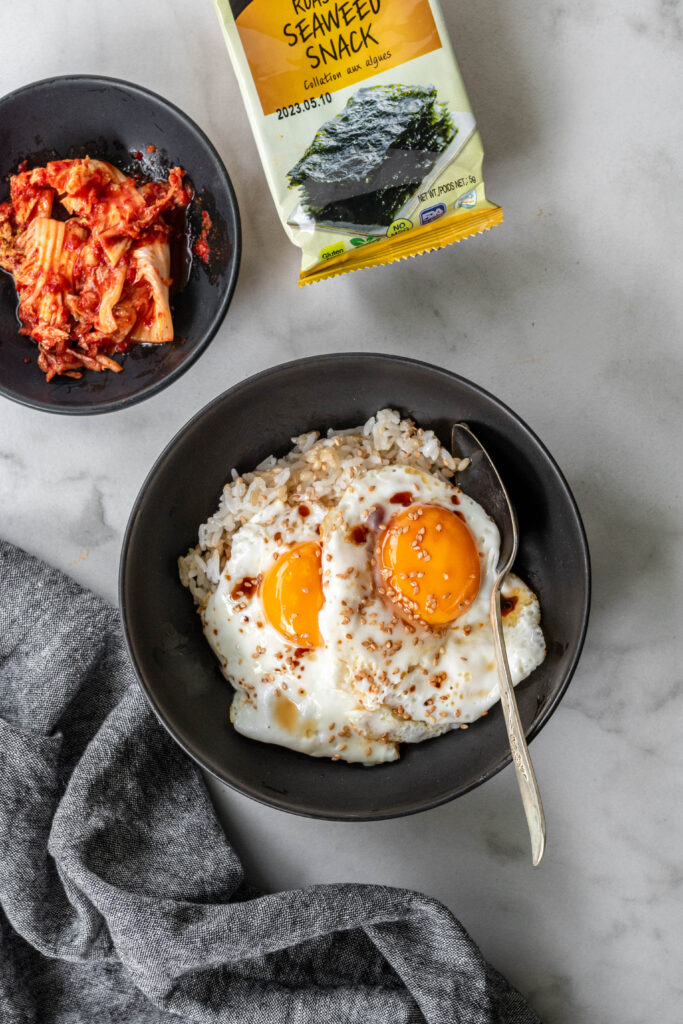
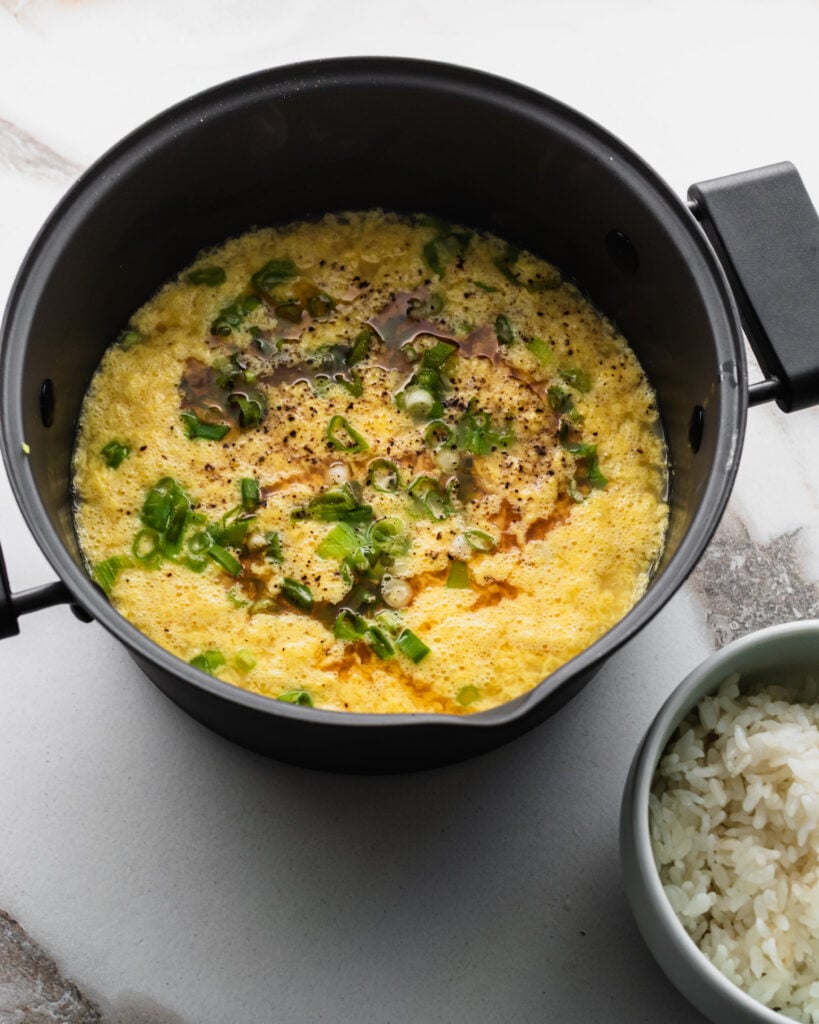
- Cheesy Kimchi Fried Rice
- Gyeran Bap (Soy Sauce + Eggs + Rice + Butter)
- Gyeran Guk (Korean Egg Drop Soup)
- Spicy Gochujang Chicken Bowls


Pantry Shortcuts:
- Instant Rice. Also called Haetbahn. Pre-cooked microwaveable bowls of short grain rice. Nuke in the microwave for 90 seconds for a perfect bowl of rice, instantly! Good for individual servings or if you don’t have a rice cooker. Look for them at the Korean Grocery Store.
- Anchovy Broth Coins. The backbone of Korean flavor is anchovy broth. Instead of simmering anchovies and dashima (kelp) for hours, use Anchovy Broth Coins instead. They are instant anchovy broth in easy-to-use tablet form. Just plop one into your soup for a long-cooked, anchovy broth flavor.
What Makes Korean Food Different
- Bold flavors. Spicy, savory, tangy, fermented — every bite feels like an explosion of flavor! Fermentation, as a key element in Korean cooking, provides deep, umami-rich flavors.
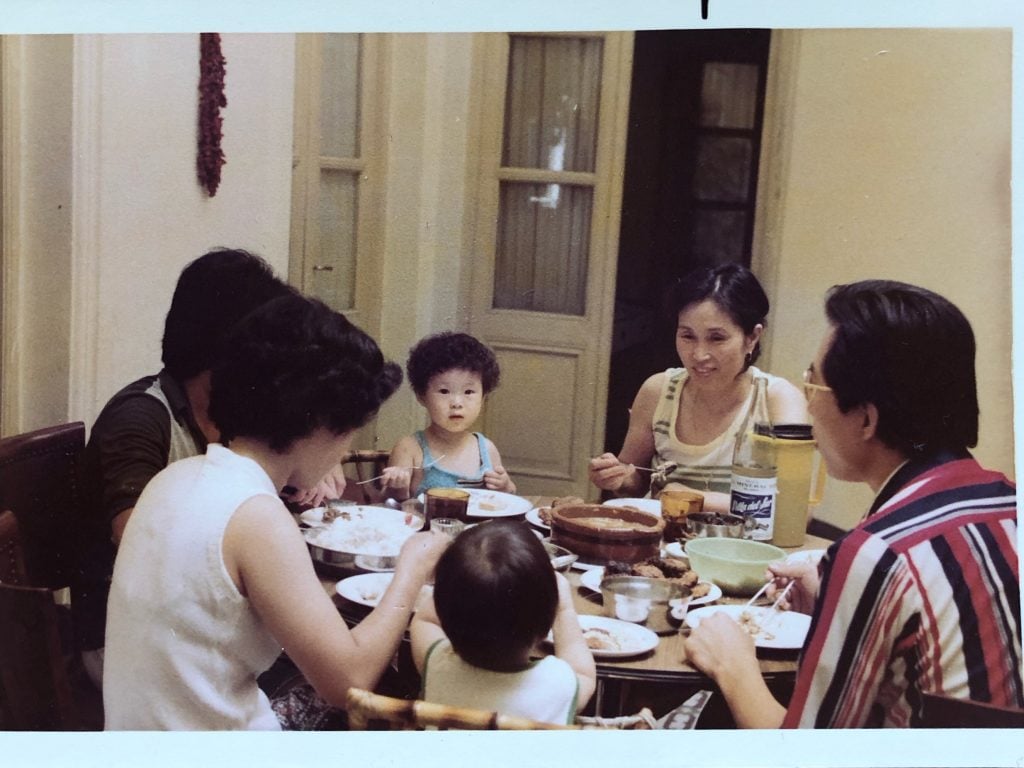
- Table Layout (Bapsang). A typical Korean meal consists of rice, soup, and a few small plates of shared side dishes (called Banchan). The side dishes change seasonally and provide variety and balance. A personal bowl of rice is an essential element of every meal.
- Communal Dining. Instead of courses (appetizer, main, soup), everything is served and enjoyed at the same time. Everyone eats together and has access to the same dishes.

Essential Korean Ingredients
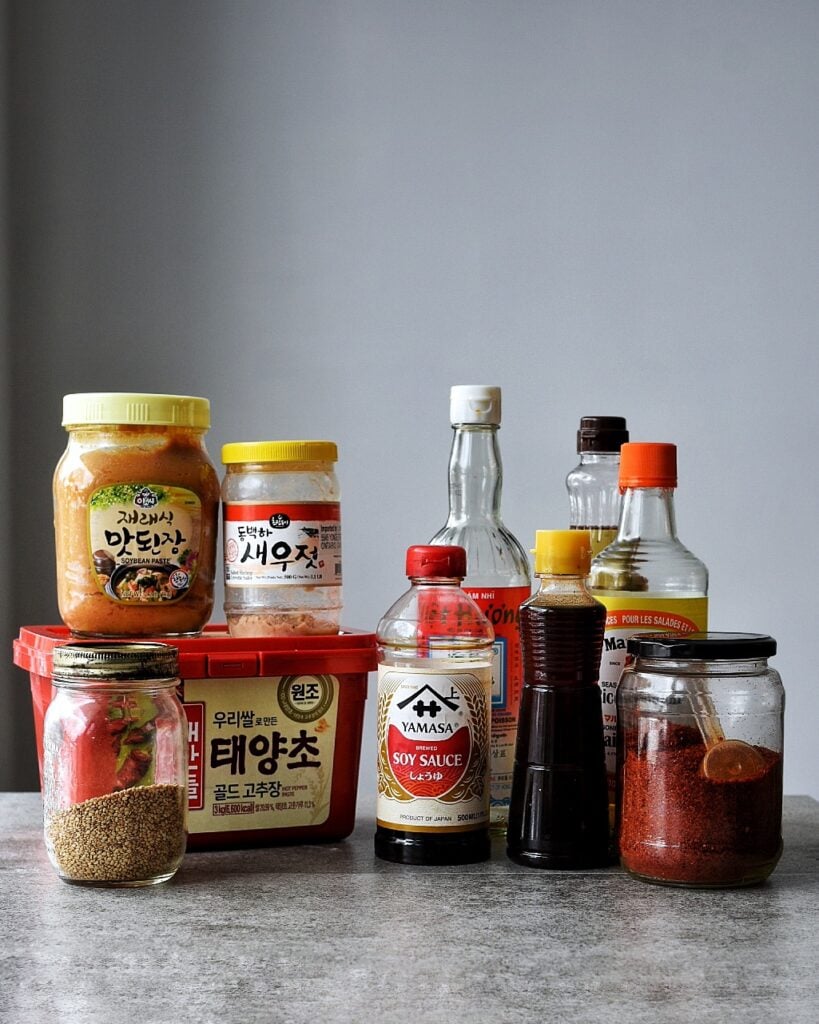
To build your Korean pantry, start with these basics:
- Soy Sauce (Ganjang). Salty, umami flavor. Do not buy the low-sodium kind!
- Fish Sauce. Adds more intensity and sharper flavor than soy sauce.
- Gochujang. Fermented Korean red pepper chili paste. They come in tubs at the Korean market. Read the label because they sometimes come in different spice levels.
- Doenjang. Fermented Korean soybean paste. They come in tubs or glass jars at the Korean market.
- Vinegar. Adds tang and acidity. I recommend Rice Vinegar (unseasoned) or Apple Vinegar, which is aromatic. But even regular white distilled vinegar works great.
- Mirin. Korean sweet cooking wine. Good for marinades and removing the gamey smell of meat.
- Sesame Oil. Fragrant and nutty. A finishing oil. You only need a little bit!
- Sesame Seeds. Adds nutty texture and crunch.
Full pantry guide coming soon!
10 Easy Korean Recipes for Beginners
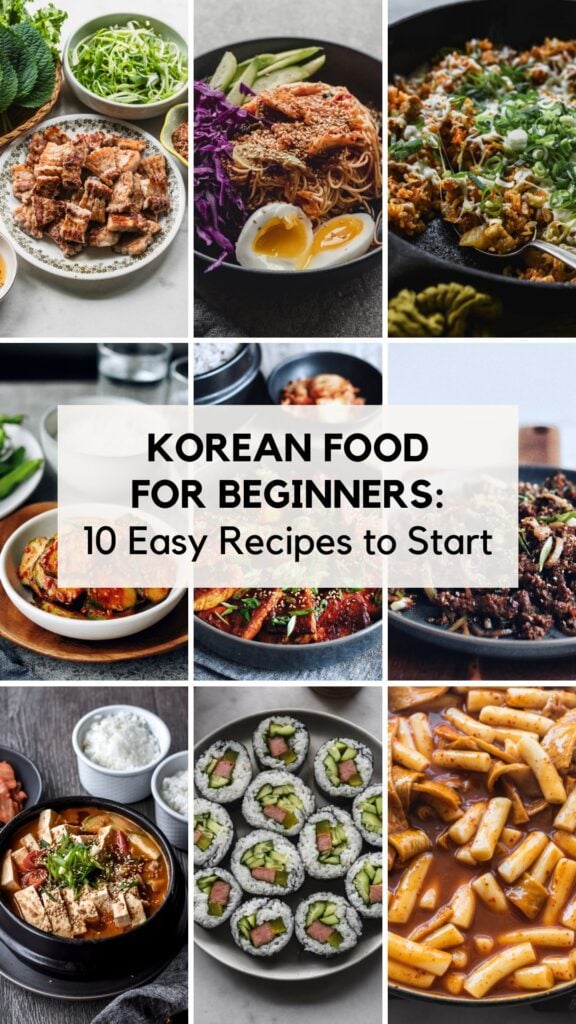
1. Bulgogi
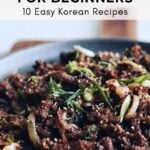
Makes a great weeknight dinner with rice, kimchi, and lettuce wraps. All you need is thinly sliced rib eye from the Asian grocery store and pantry ingredients.

2. Kimchi Jjigae (Kimchi Stew)
Cozy comfort food at its best! A great way to use up that jar of old kimchi in the back of your fridge. You will need old, sour kimchi for the best flavor.
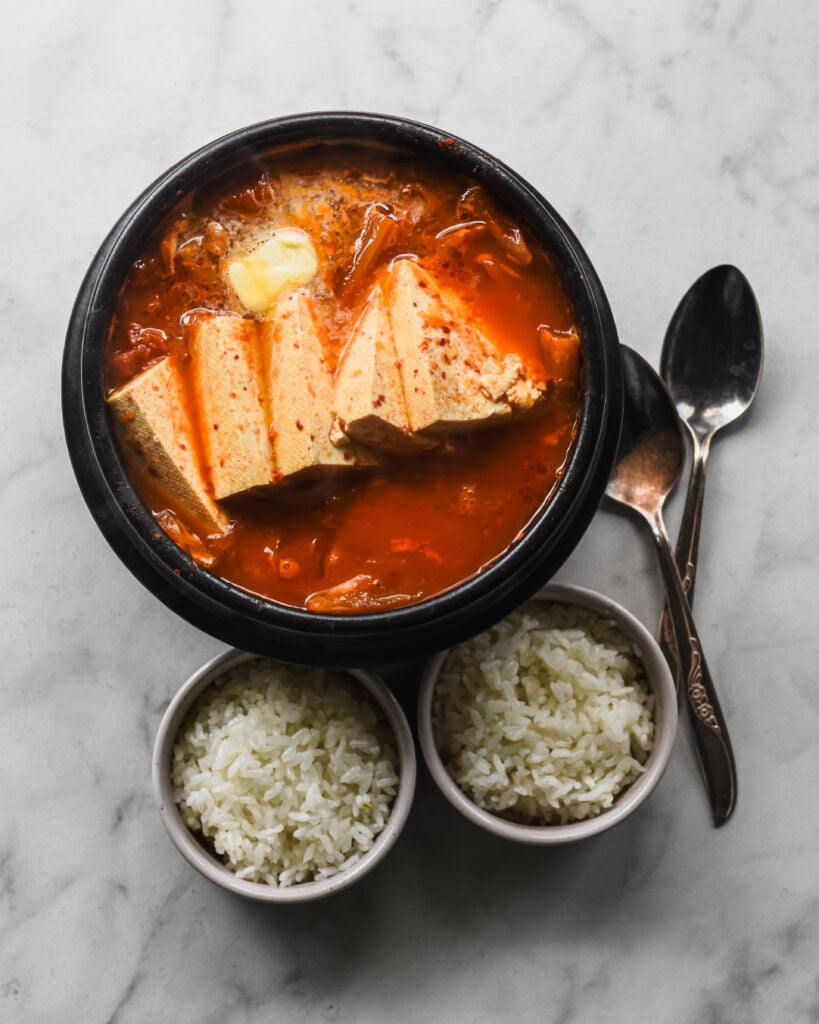
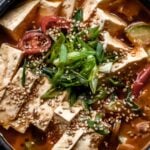
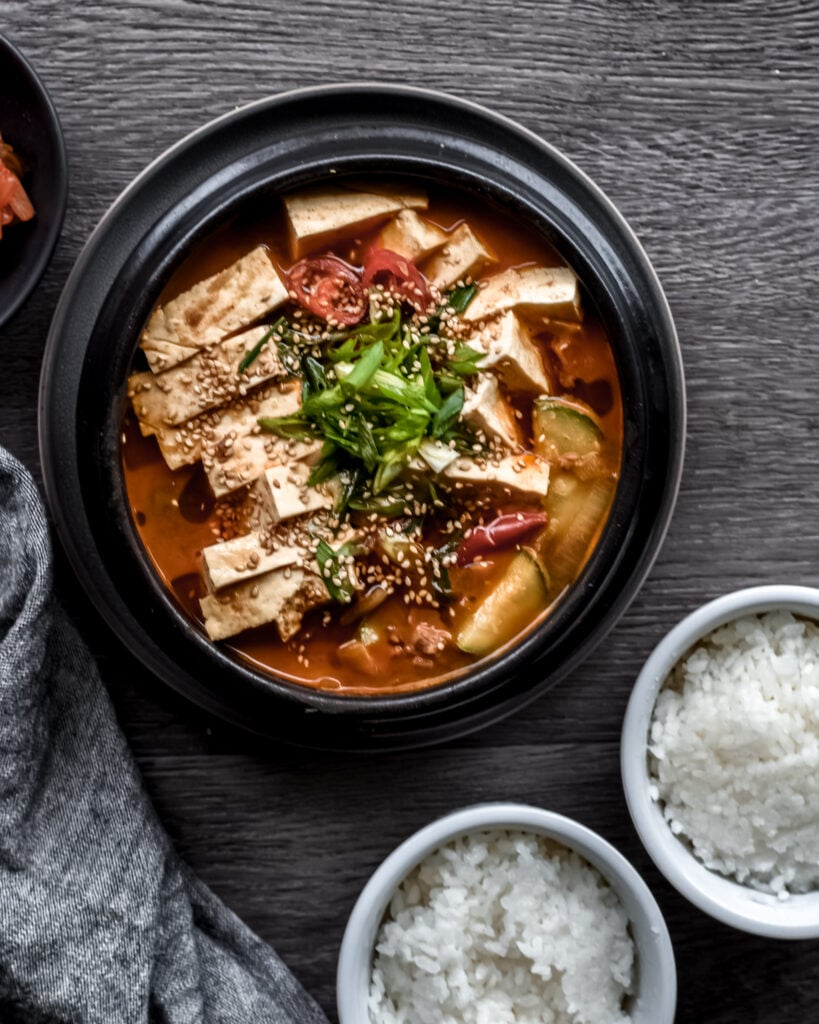
3. Korean Soybean Paste Stew (Doenjang Jjigae)
A Korean classic that can be put on the table in 20 minutes. The star ingredient is Doenjang or Korean Soybean paste. Everything cooks in one pot: meat, vegetables, tofu, and broth.
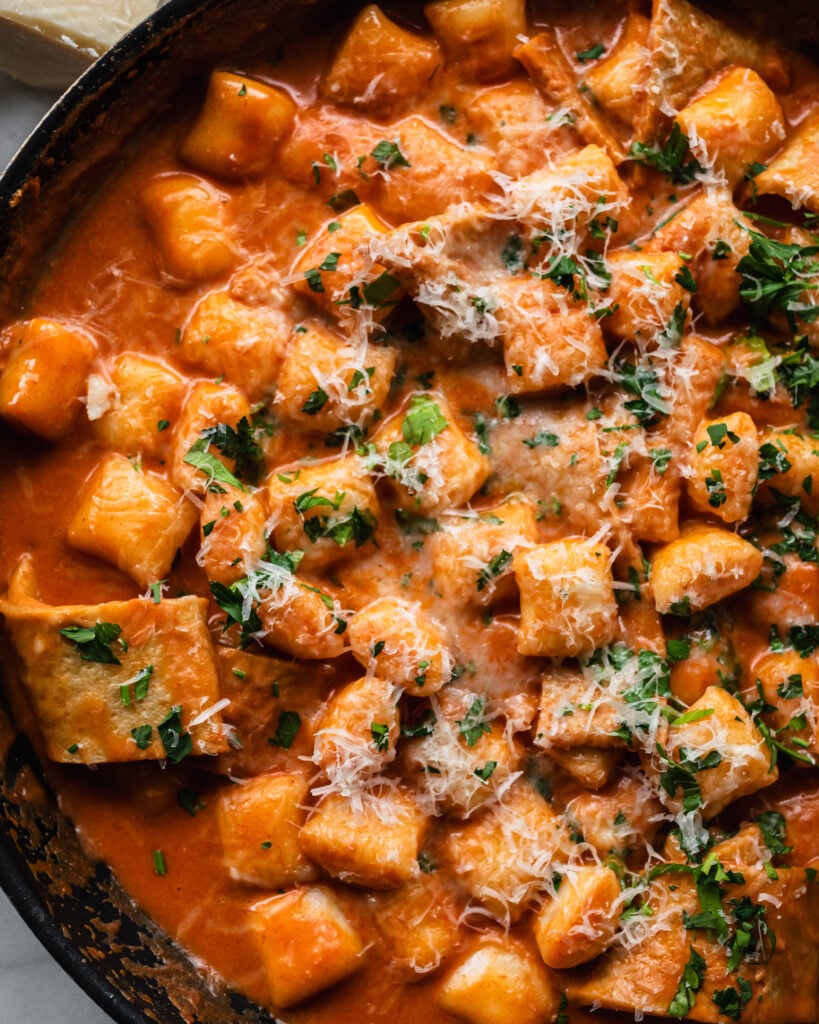
4. Rosé Tteokbokki (Korean Rice Cakes)
Chewy Korean rice cakes smothered in creamy, spicy sauce. Yes, please! A popular South Korean street food that can be made in 15 minutes.
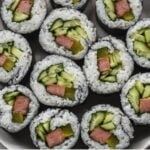
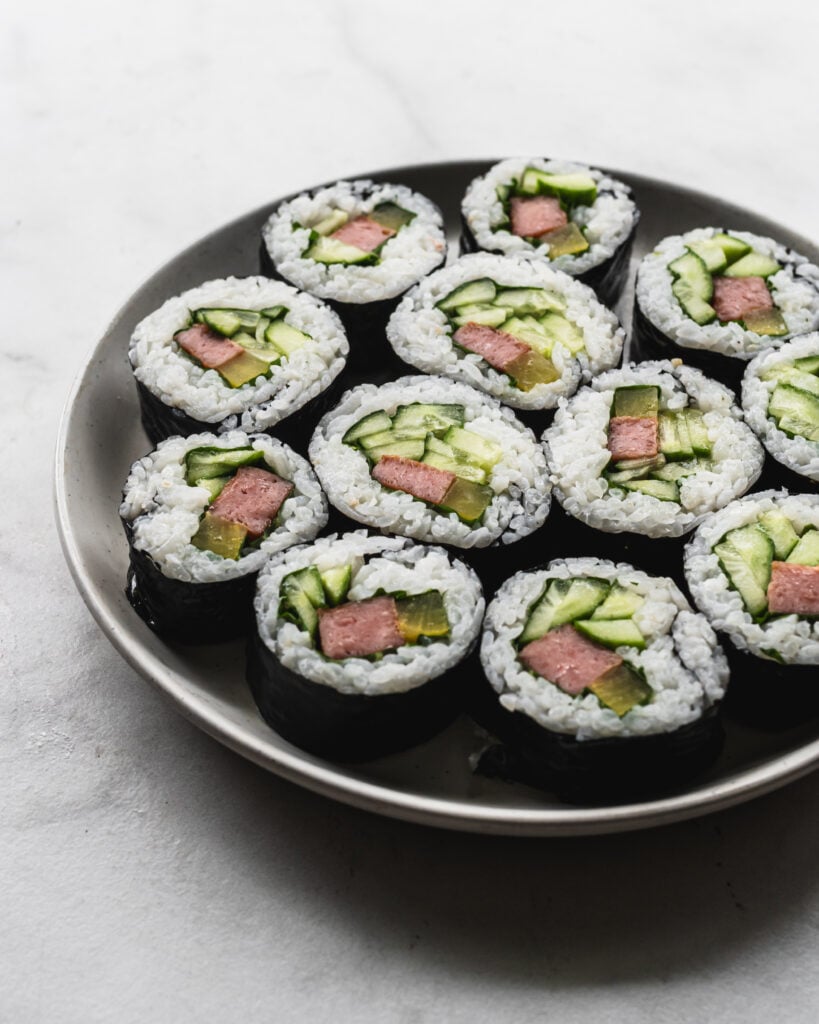
5. Spam Gimbap
A snack food, lunch box item, or easy side dish. Roll up the ingredients (Spam, cucumber, Danmuji, perilla or lettuce) with rice and a sheet of Nori. These seaweed rice rolls are fun to make and fun to eat!
6. Korean Steamed Egg (Gyeran Jjim)
A side dish that tastes good with rice. Once you get a hang of the technique, these fluffy eggs will become your new favorite.

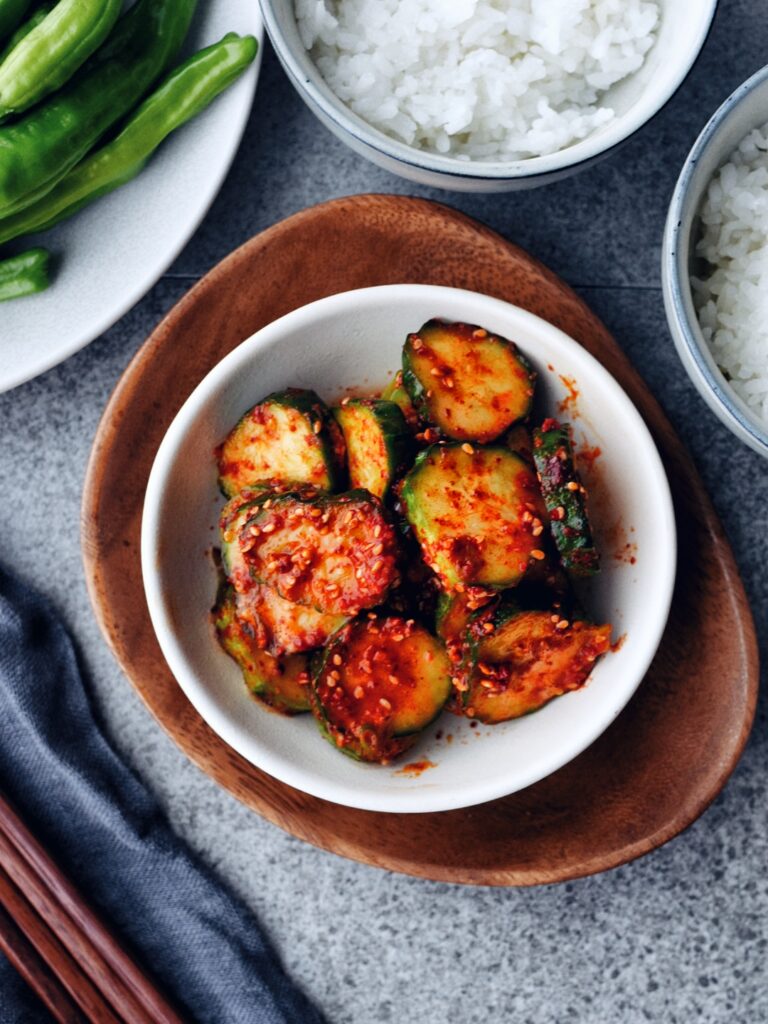
7. Spicy Cucumber Salad (Oi Muchim)
An easy side dish (or banchan) that tastes good with everything. Spicy, savory, and a little bit sweet. *Spice level can be adjusted.
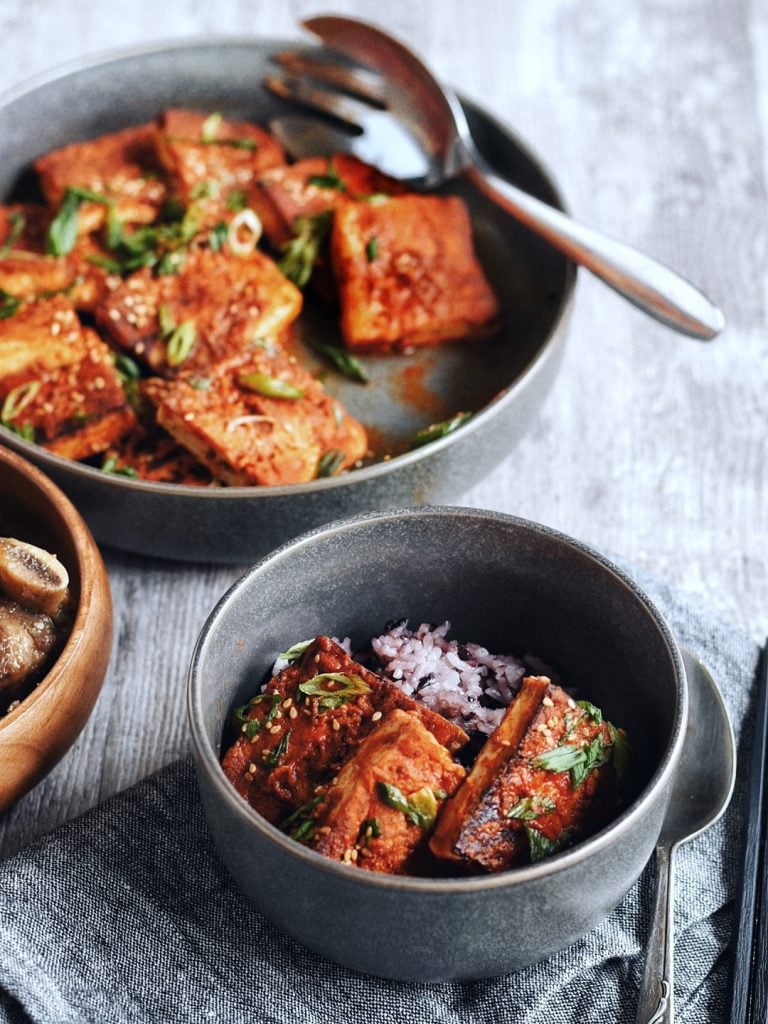
8. Korean Braised Tofu (Dubu Jorim)
An everyday Korean side dish (or banchan) that is vegan and takes 10-minutes to make. Filling, healthy, and tastes good with rice.
9. Spicy Korean Cold Noodles (Bibim Guksu)
A cold noodle dish with quick-cooking Somyeon noodles (thin wheat noodles) and a 5-minute sauce. Top with kimchi, veggies of choice, and a soft boiled egg. A summertime favorite!

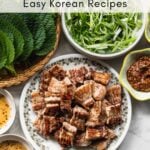
10. Grilled Pork Belly (Samgyeopsal)
Make your own Korean BBQ spread at home with Samgyeopsal.

How to Build a Traditional Korean Meal
A traditional Korean table setting typically includes both individual and shared elements.
Individual:
Placed directly in front of each person, for personal consumption.
- Rice. A personal bowl of rice (bap).
- Soup. A personal bowl of soup. Often placed next to the rice at each table setting.
- Condiments. Small individual bowls for dipping sauces, if needed. Ex. sesame oil or ssamjang. That way, people don’t have to worry about double-dipping.
Shared:
Placed in the center of the table and accessible to everyone.
- Kimchi. Served at every meal. The kind of kimchi can be seasonal. For example, cucumber kimchi in the summer or ramp kimchi in the spring.
- Main. Proteins are usually served as mains but in smaller portions. Fish, meat, seafood.
- Side Dishes. A variety of side dishes include namul (steamed veggies), jorim (braised dishes), and jeon (fried dishes).
Common Mistakes
As you’re getting started, avoid these common mistakes:
- Not mixing by hand. A key element in Korean cooking is mixing by hand, also called Sohn Mat. A cook’s touch, if you will, that creates a unique final flavor and touch. Hand mixing, not tongs or a spoon, allows the flavors to penetrate into the food and improves the overall texture. *To hand mix, use clean hands or food preparation gloves.
- Skipping the broth. For Korean soups and stews, the broth is a key element. It makes a big difference in the final flavor. Make it homemade, use a dashi packet, Anchovy Broth coins, or Dashima (instant dashi powder). Dashima is similar to chicken bouillon and is easy to use. It comes in different flavors: seafood, anchovy, mushroom, beef, clam, etc.
- Forgetting to adjust seasoning. A good tip for every cook. But especially important for cooking Korean food, as fermented flavors are always changing and deepening. Taste and adjust the seasoning. If it’s too salty or spicy, add a pinch of sugar. If it’s bland, add a splash of soy sauce or fish sauce. If it needs a sparkle, add a splash of vinegar. If you can’t taste the sesame oil, add another drizzle.
How I learned to Cook Korean Food
I learned how to cook Korean food from my Halmoni, my Korean grandmother. She took care of me after school while my parents worked long hours. In her kitchen, we tasted, talked, and cooked food together.
Halmoni was an excellent home cook with an exceptional “Sohn Mat.” Like many Korean cooks, she was an intuitive cook who used seasonal ingredients, mixed with her hands, and constantly tasted and readjusted the seasonings.
When I moved out, I found it difficult to recreate the Korean food of my childhood. Before the age of social media, it was quite difficult to find Korean recipes in North America. Halmoni became my go-to resource. Her recipes were vague (for example: add soy sauce until it’s salty enough, add a little bit of sugar until it’s balanced) so I started writing down exact amounts.
I started this blog as a way to preserve her recipes and honor my cultural heritage. Many recipes are inspired by the meals we cooked and ate together. Enjoy!