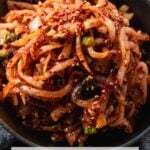
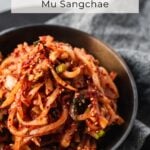
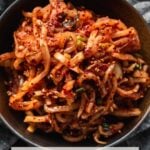
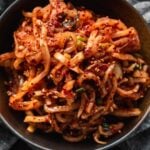
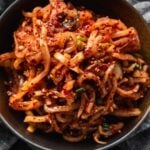
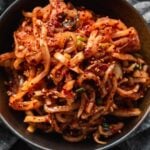
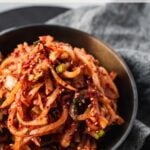
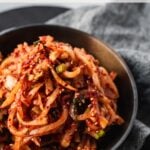
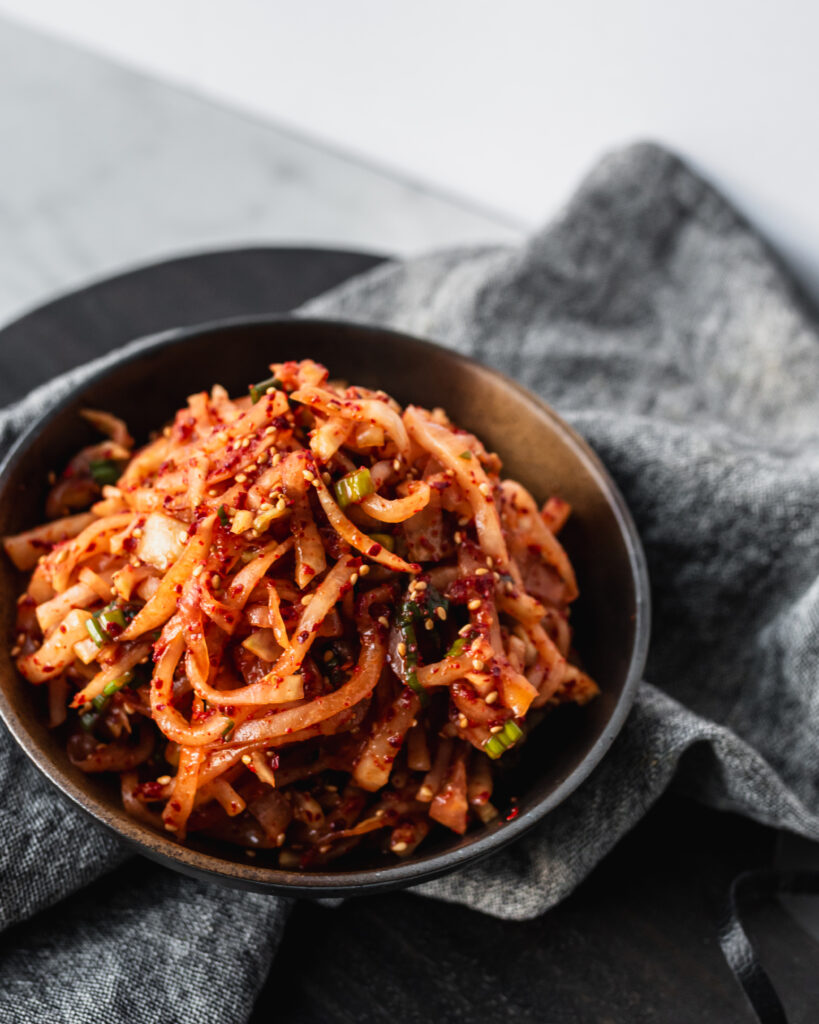
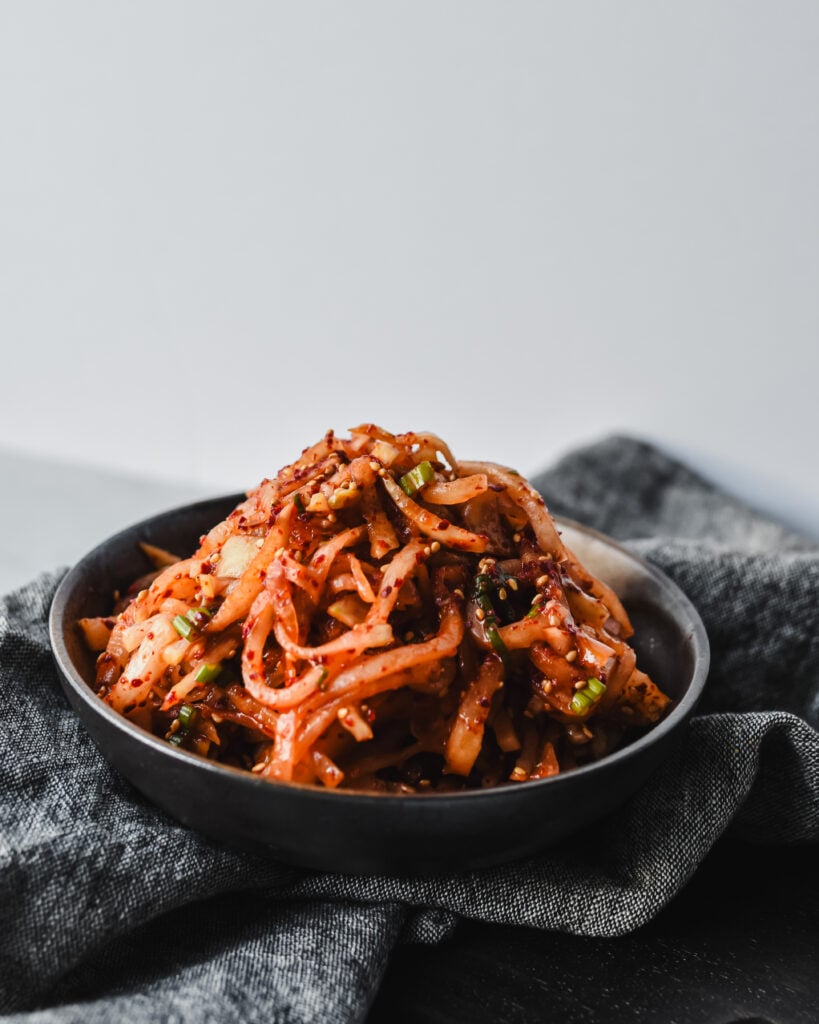
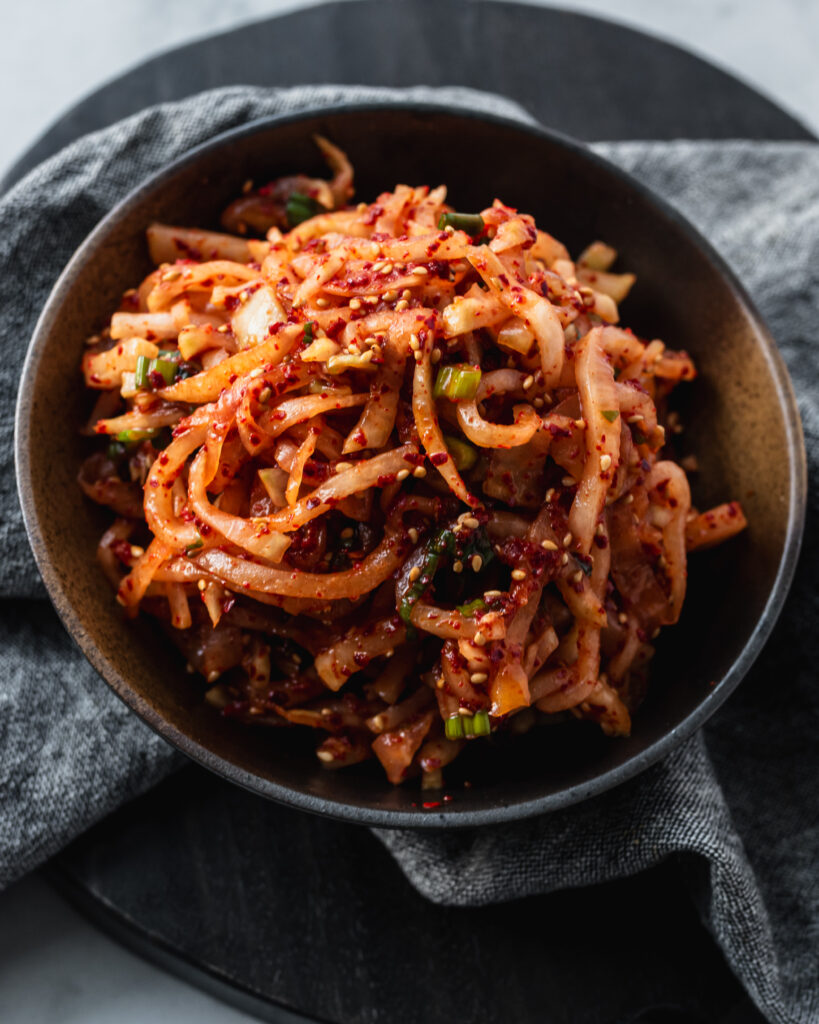
An easy and delicious side dish that always tastes good: Spicy Korean Radish Salad! Also known as Mu Sangchae, thinly sliced radish strips are salted then seasoned with a simple dressing. The combination is spicy, savory, refreshing and addictively tasty. A low-effort, healthy side dish that brightens any meal!

What is Spicy Korean Radish Salad?
Spicy Korean Radish Salad, also called Mu Sangchae, is a favorite Korean side dish made with radish strips and tossed with a quick dressing. The flavor is spicy, savory, and so delicious!
In Korean home cooking, Musangchae is a popular side dish. It’s easy to make, requires minimal ingredients, and full of nutrition and fiber. The balance of salty, tangy, and slightly sweet with the refreshing crunch make it irresistible.
Korean Radish Salad is also enjoyed as a vegetable component in Bibimbap. And with grilled meats and indulgent mains like Samgyeopsal or Bossam.
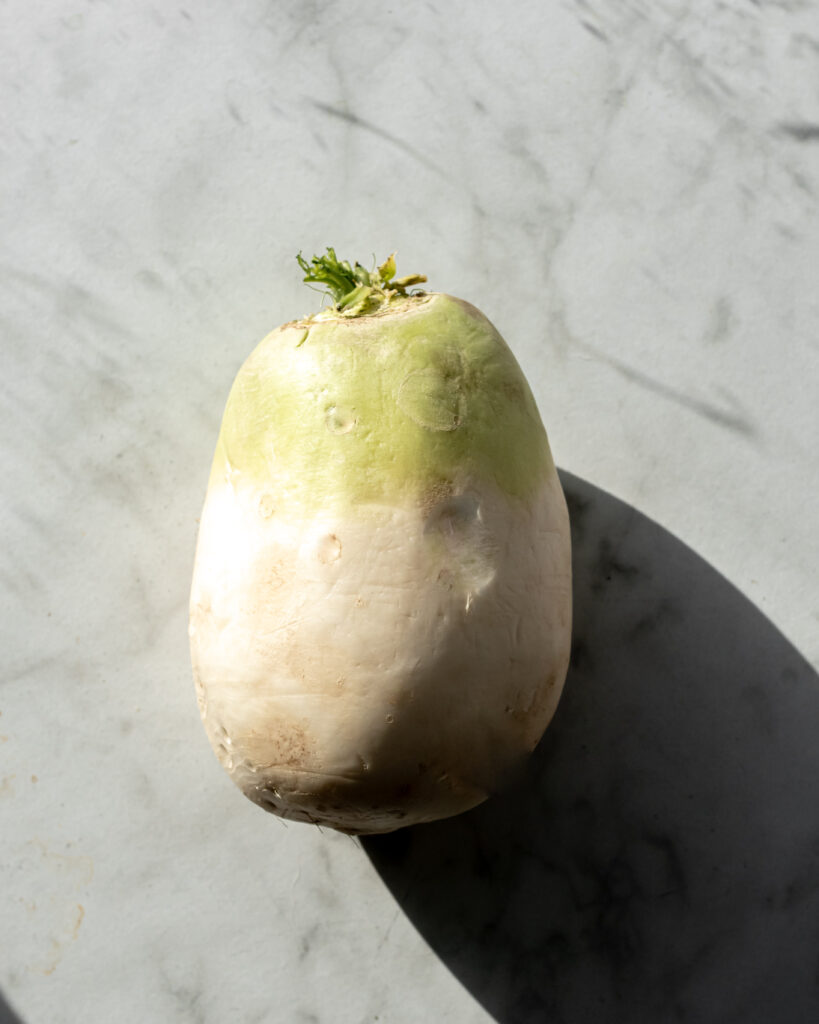
The star ingredient is Korean Radish, a kind of daikon. Also called Mu, it’s a common ingredient in Korean cuisine. Korean Radish is used in soup, kimchi, pickles and braised dishes. The daikon becomes soft and tender when cooked.
More recipes with Korean radish: Cubed Radish Kimchi (Kkakdugi), Galbi Jjim, and Oxtail Soup.
To make at home, make sure to salt the radish matchsticks for at least 10 minutes. This quick pickling technique will remove any excess moisture. Otherwise, the final dish will be very wet.
Ingredients
- Korean radish. Also called Mu (or Moo). Look for Korean radish that is smooth, firm, and heavy with no cracks. They can be found at the Korean grocery store and are seasonal in late fall and early winter. Can be subbed with Japanese daikon radish, which is long and white, although it won’t be as crunchy.
Korean radish are round and big. The color is light-green near the top with a creamy white body. In general, the more green that covers the radish, the better and sweeter the radish.
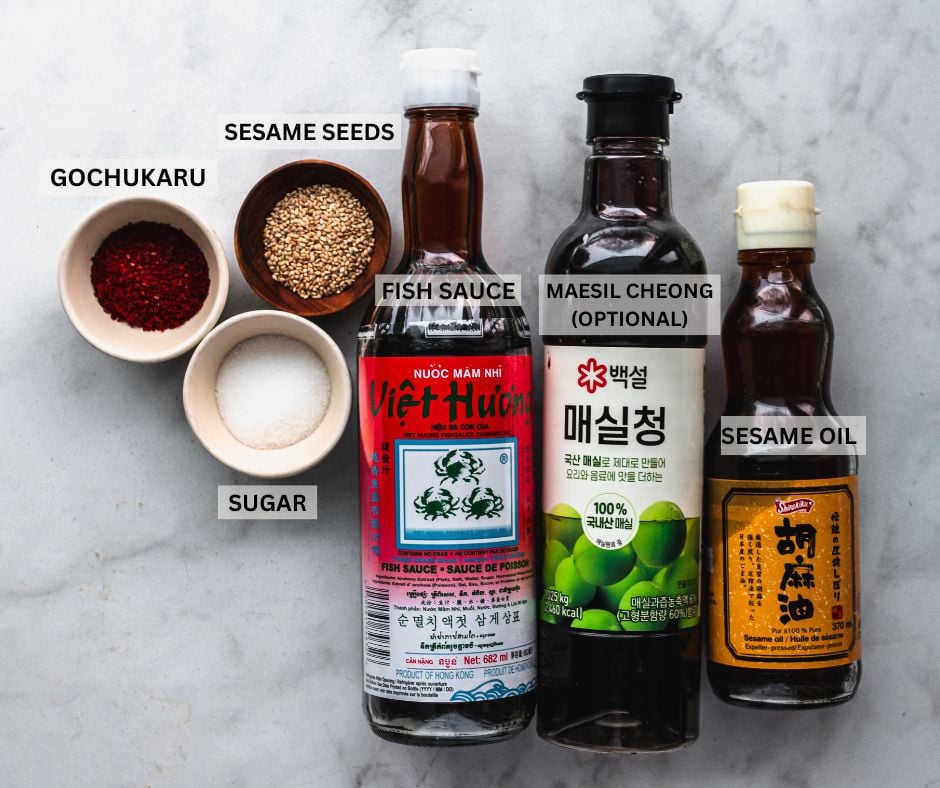
- Gochukaru. Korean red pepper flakes. They come in either coarse flakes or fine flakes. Some people prefer fine flakes for Korean Radish Salad, as it blends more seamlessly without texture. But I don’t mind a little extra texture with the coarse flakes.
- Sugar. To balance all the spicy and salty elements.
- Fish Sauce. Adds umami flavor and depth. *For a vegetarian or vegan version, swap with soy sauce.
- Green Onions. Subtle onion flavor.
- Garlic. Minced raw garlic is essential. Use a microplane if you can.
- Sesame Oil + Sesame Seeds. Adds fragrance and aromatic nuttiness.
- Maesil Cheong (*optional*). Korean green plum syrup. Tangy and sweet. If you don’t have it, leave it out.
How to make Mu Sangchae
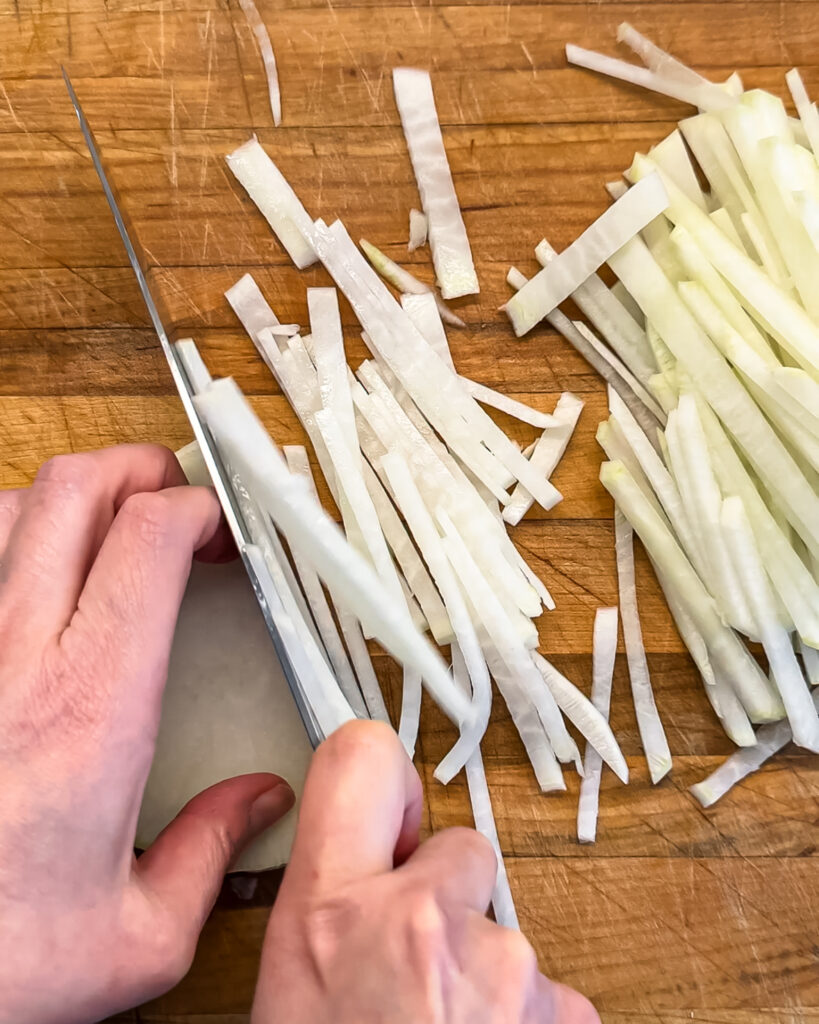
- Julienne radish. Wash the radish under cold running water. Peel the radish with a vegetable peeler and trim the ends. Slice into thin circles, about 1/8-inch thick. Then, slice the circles into matchsticks, about 1/8-inch thick. Trasnfer the radish matchsticks to a large bowl.
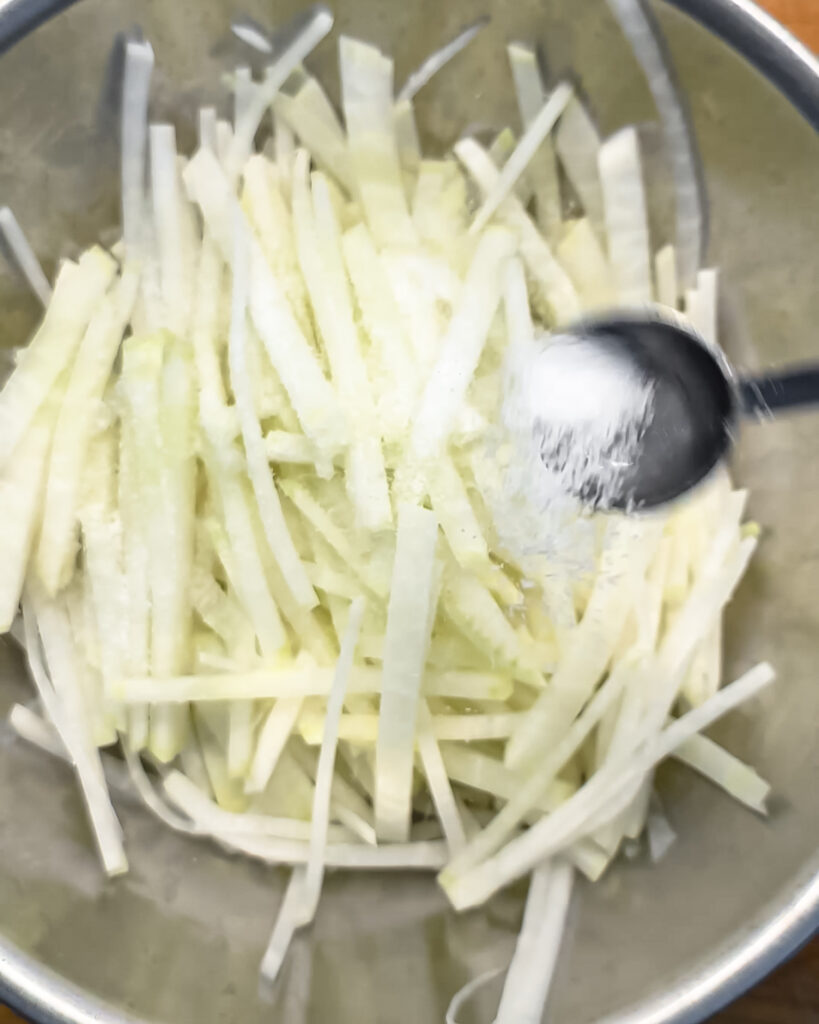
- Salt radish. Add 1 tsp salt to the radish matchsticks. Using clean hands, gently toss to coat. Set aside for 10 minutes.
- Squeeze out excess water. Transfer the radish to a metal sieve. Discard the excess water from the bottom of the bowl. Add the salted radish to a clean dishcloth. Wring the dishcloth to remove excess water. Keep wringing until there’s no more water.
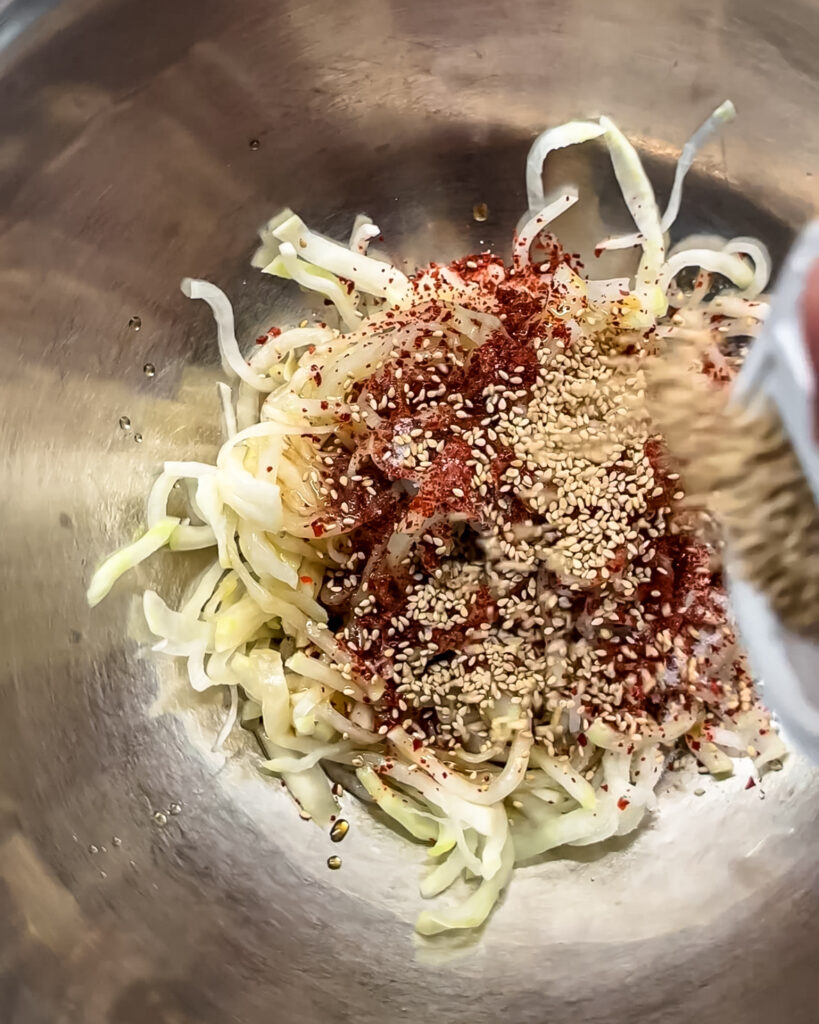
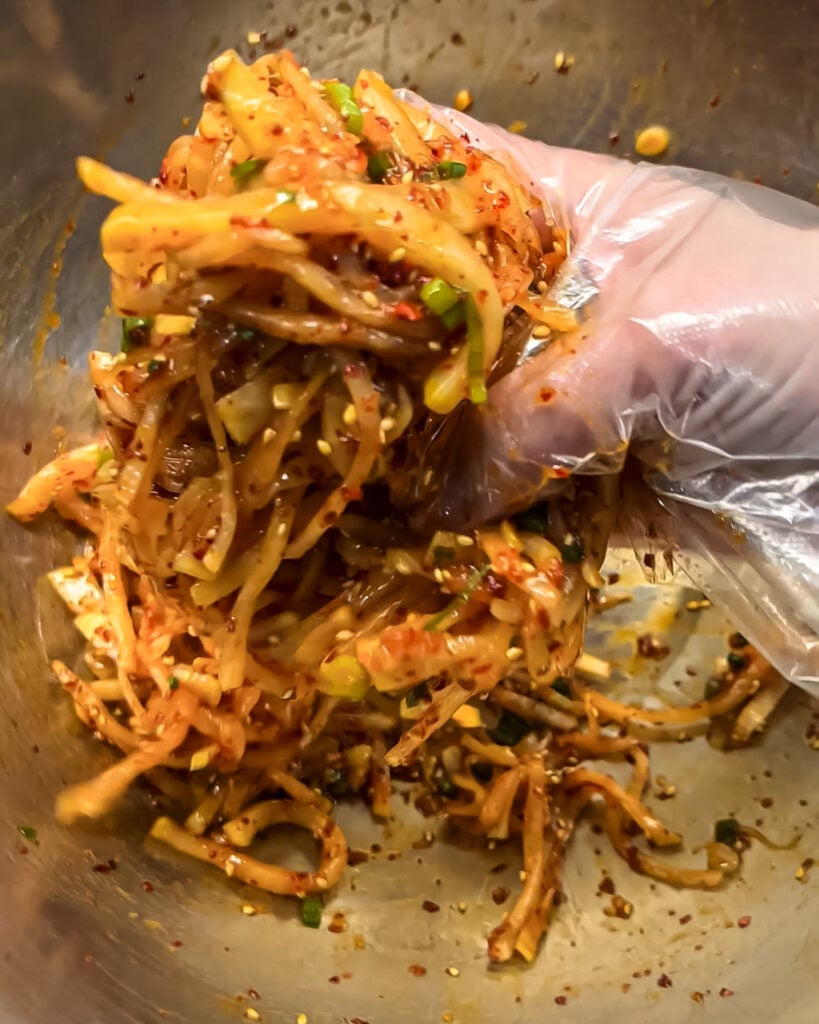
- Add dressing. To a large bowl, add the drained, salted radish. Add the Gochukaru, sugar, fish sauce, sesame oil, sesame seeds, green onion, garlic, and Maesil Cheong (if using). Using your hands (or tongs, if you prefer), mix together until well combined.
- Serve. Transfer the Korean Radish Salad to a serving dish. Discard any excess liquid from the prep bowl. Enjoy!
PRO Tips
- Remove as much water as possible. To ensure a final Musangchae that’s not too wet, use a dishcloth to wring out as much water from the salted radish as possible. Keep wringing until there’s no more water left!
- Use food preparation gloves. To mix the dressing with the radish, use food preparation gloves as the color of the gochukaru may stain your hands. Otherwise, use clean hands and wash well afterwards.
- Store in an airtight container. Mu Sangchae can be safely stored in the fridge for 3-5 days, in a tightly sealed container. As it sits in the fridge, it will continue to release liquid. The remaining liquid can be discarded before serving.
Serve with
The flavor profile of Korean Radish Salad is similar to kimchi but it’s not fermented. Serve in place of kimchi to any meal.
Typically, Musangchae goes well with rich meats such as pork belly. The savory, salty bite cuts through the richness of fatty pork especially. I like to serve with Air Fryer Pork Belly, Samgyeopsal, Bossam, and LA Galbi.
FAQ
Yes, you can use regular daikon instead of Korean radish. The final result will be similar but not quite the same. It will be softer and not as crunchy.
Technically, yes — you can skip salting the radish. However, the final dish will release a lot more liquid. You will also need to add 1 Tbsp more fish sauce to replace the 1 tsp salt added during the salting process.
Yes, to make it less spicy, add less Gochukaru. Instead of the 2 Tbsp that’s recommended, add only 1 Tbsp.
More Korean side dishes
- Korean Pumpkin Salad
- Marinated Perilla Leaves
- Soft Silken Tofu with Korean Dressing
- Spicy Fishcake Side Dish
- Ssamjang Chili Peppers
If you love Korean side dishes, try this next: Easy Beginner Friendly Korean Banchan.
Spicy Korean Radish Salad (Mu Sangchae) recipe
Equipment
- Large Bowl
- Metal sieve
- clean dishcloth
- vegetable peeler
- food preparation gloves *optional
Ingredients
- 1 lb/ 454 grams Korean Radish (also called Mu or Moo), can be swapped with Japanese daikon
- 1 tsp salt
Dressing
- 2 Tbsp Gochukaru *Korean red chili powder
- 1 Tbsp Fish Sauce
- 1 Tbsp Sugar
- 1 Tbsp Sesame Oil
- 1 Tbsp Sesame Seeds
- 1 Tbsp Maesil Cheong *Korean green plum syrup (optional)
- 2 green onion
- 2 cloves garlic
Instructions
- Julienne radish. Wash the radish under cold running water. Peel the radish with a vegetable peeler and trim the ends. Slice into thin circles, about 1/8-inch thick. Then, slice the circles into matchsticks, about 1/8-inch thick. Trasnfer the radish matchsticks to a large bowl.
- Salt radish. Add 1 tsp salt to the radish matchsticks. Using clean hands, gently toss to coat. Set aside for 10 minutes.
- Squeeze out excess water. Transfer the radish to a metal sieve. Discard the excess water from the bottom of the bowl. Add the salted radish to a clean dishcloth. Wring the dishcloth to remove excess water. Keep wringing until there's no more water.
- Add dressing. To a large bowl, add the drained, salted radish. Add the Gochukaru, sugar, fish sauce, sesame oil, sesame seeds, green onion, garlic, and Maesil Cheong (if using). Using your hands (or tongs, if you prefer), mix together until well combined.
- Serve. Transfer the Korean Radish Salad to a serving dish. Discard any excess liquid from the prep bowl. Enjoy!
Video
Notes
- Remove as much water as possible. To ensure a final dish that’s not too wet, use a dishcloth to wring out as much water from the salted radish as possible. Keep wringing until there’s no more water left!
- Use food preparation gloves. To mix the dressing with the radish, use food preparation gloves as the color of the gochukaru may stain your hands. Otherwise, use clean hands and wash well afterwards.
- Store in an airtight container. Mu Sangchae can be safely stored in the fridge for 3-5 days, in a tightly sealed container. As it sits in the fridge, it will continue to release liquid. The remaining liquid can be discarded before serving.