An easy and delicious Korean rice bowl : Hwe Dup Bap! A light yet satisfying meal starring sushi-grade raw fish served with lots of fresh veggies and rice. Drizzle with spicy Gochujang sauce and crushed Nori (Gim). Mix everything together before eating and enjoy!

What is Hwe Dup Bap?
Hwe Dup Bap is a Korean rice bowl starring sushi-grade raw fish or sashimi. Similar to Bibimbap, everything is piled into a bowl and mixed right before eating. However, adding raw fish (instead of meat) keeps it light and refreshing. A healthy meal that’s good for summer.
In Korean, “Hwe” means raw fish. “Dup Bap” means over/with rice. Hwe Dup Bap is basically a rice bowl with raw fish, similar to Poke Bowls or Chirashi.
For Hwe Dup Bap, there’s lots of salad greens and fresh vegetables included with the rice. Add crumbled nori (gim) and masago (fish eggs) for a special final touch.
Also, make sure to make the spicy-sweet, tangy Gochujang Sauce. This tangy sauce brings everything together! In Korean, it’s called Cho Gochujang because vinegar is mixed with the red pepper paste for a tangy, bright flavor.
More assembly than cooking, I love to make Korean Hwe Dup Bap on hot summer days. So light and fresh! Like a salad rice bowl with all your favorite sashimi.

Ingredients:
- Sushi Grade Fish. Look for the freshest sashimi-grade fish possible. A combination of salmon, tuna, and white fish is ideal.
- Sushi Rice. I recommend short grain rice (also called sweet rice) for its textural, toothsome bite. Long-grain rice will be too fluffy and break apart as you mix everything together.
- Salad Base. I recommend Bibb, Butter, or Gem Lettuce for soft, sweet crunch. Mixed spring greens (from a box) and green or red leaf lettuce also work.
- Vegetables. Finely julienned carrots, cucumber, radish sprouts, red cabbage and daikon are common additions.
- Perilla Leaves. Optional but adds an herbal, earthy Korean flavor.
- Gochujang Sauce. Also known as Cho Gochujang sauce, this sweet, spicy, and tangy Korean sauce is essential!
- Sesame Oil. Frequently served alongside the Gochujang Sauce. Adds nutty flavor and makes it easier to mix everything together (so the rice doesn’t stick and clump).
For additional toppings:
- Masago (Fish Eggs). *Optional. One scoop per bowl adds a salty, decadent bite! Look for it in the freezer section at the Asian market. Choose either large or small eggs – they both taste delicious.
- Nori. Roasted, lightly crushed seaweed is a classic topping. Lightly crush a packet of roasted, salted seaweed snack (gim) for flavor and that light, crumbly texture.
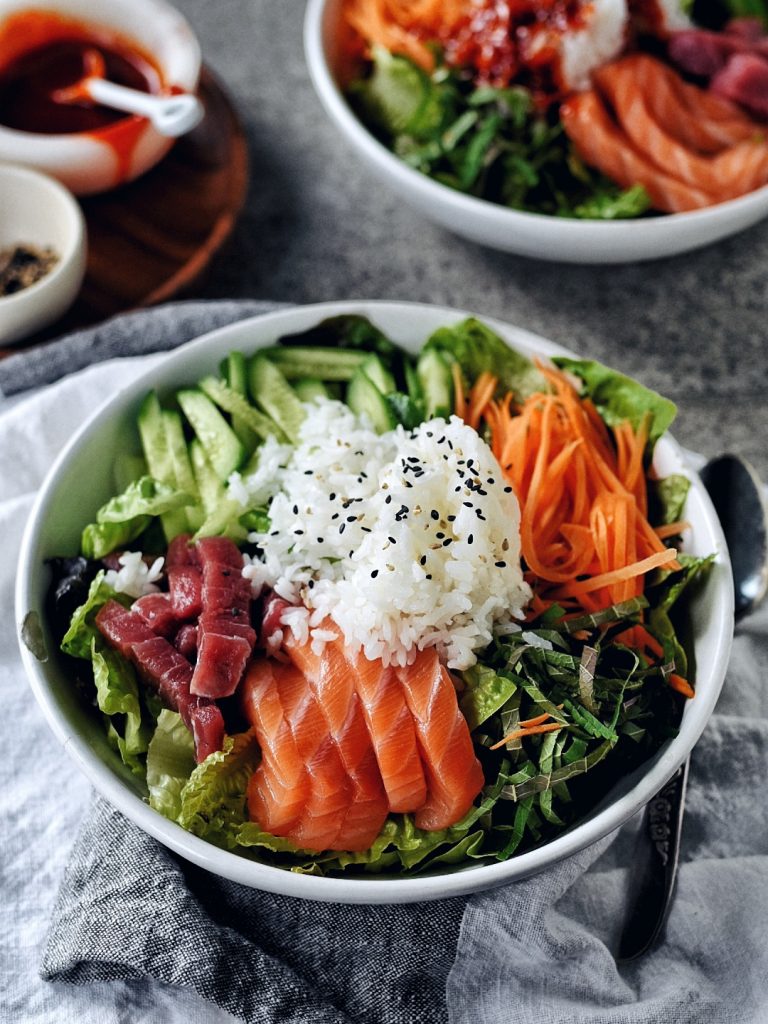
How to Make Korean Sashimi Rice Bowl:
- Make the rice. Make rice in the rice cooker, according to manufacturer’s instructions.
- Make Gochujang Sauce. In a small bowl, stir together the ingredients. Set aside.
- Prep veggies. Wash and finely juliene the carrots and cucumber. Wash and chop the lettuce and perilla leaves, if using.
- Chop raw fish. Using a sharp knife, chop the raw fish into 1-inch chunks. Set aside.
- Assemble. To a large bowl, add salad greens on the bottom. Add julienned vegetables, perilla leaves, raw fish, and rice. Top with nori and masago.
- Serve. Drizzle with gochujang sauce and sesame oil. Mix well and enjoy!
Pro Tips:
- Julienne Vegetables. Slice as thinly as possible for best texture!
- Use LARGE Bowls. For serving, big bowls are best. You need to mix everything before eating. If the bowl is too small, food will fall out.
- Serve Gochujang sauce on the side. That way, people can add as much as they like. And adjust to their own spice tolerance.
- For non-spicy eaters: Skip the Gochujang sauce and add only sesame oil instead.
- Swap white rice with Korean Purple Rice. For added nutrition. And it’s very pretty!
FAQ
Look for sashimi grade fish at your local fish monger or nearest Asian grocery store. If that’s not accessible, try your local sushi restaurant. They often sell sashimi by the pound.
Sushi rice is short grain rice that’s served in sushi and sushi rolls. The higher starch content and small, rounded shape cooks differently than long or medium grain rice. The texture is more sticky, firm, and toothsome. In sushi rolls, sushi rice is often flavored with vinegar and sugar.

More recipes:
- Salmon Poke Bowls
- Asian Rice Bowls
- Bibim Guksu (Korean Cold Mixed Noodles)
- Korean-style Rotisserie Chicken Salad
- Oi Muchim (Korean Cucumber Salad)‘
- Korean Romaine Salad with Apple (Sangchu Geotjeori)

Hwe Dup Bap (Korean Sashimi Bowl) recipe
Ingredients
Sushi bowl:
- 1 lb sashimi grade fish (salmon, tuna, white fish)
- 1.5 cups cooked short grain rice (1 cup per person, cooked)
- 3 cups/2 big handfuls for each bowl salad greens (Any kind of soft lettuce used for salad will work: Bibb, Butter, Gem lettuce, green or red leaf lettuce, boxed spring greens, spinach mix, etc.)
- 1 small carrot
- 2 small cucumbers (or 1/2 large one)
Toppings (optional but recommended):
- 4-6 perilla leaves (divided evenly)
- 1 small packet roasted + seasoned seaweed snack (gim) (divided evenly)
- 2 Tbsp Masago (divided evenly)
Cho Gochujang:
- 2 Tbsp Gochujang
- 1 Tbsp Vinegar (white distilled, white wine, rice wine, apple cider vinegar, apple vinegar all work well here)
- 1 Tbsp sesame oil (plus more for drizzling)
- 1/2 Tbsp sugar
Instructions
- In a small bowl, make the Cho Gochujang sauce. Add ingredients and mix well. The sauce should be smooth and pourable. Add more vinegar and/or sesame oil 1 tsp at a time, if the sauce looks too thick. Set aside.
- Prep vegetables: roughly chop the lettuce, julienne the carrots and cucumbers, and chiffonade perilla leaves (like basil).
- Assemble: In two bowls, evenly divide the salad greens and vegetables. Add sushi-grade fish and scoop of rice.
- Add toppings: Evenly divide the perilla leaves, crushed Nori, and masago between the two bowls.
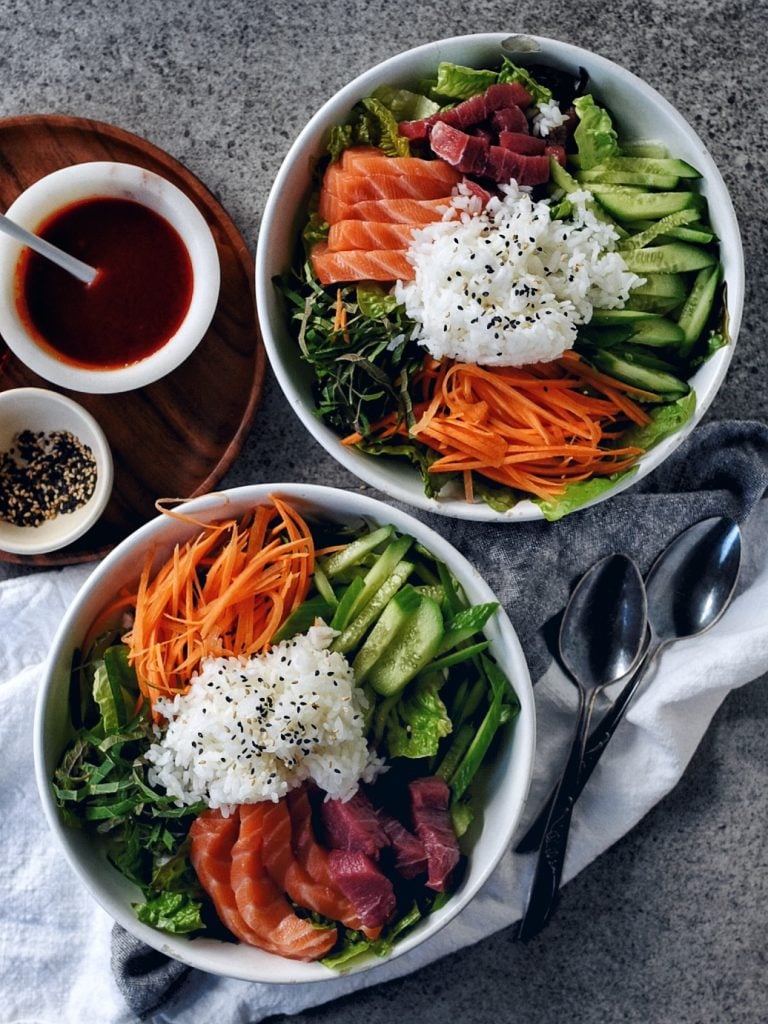
- Serve sushi bowls with Cho Gochujang and extra sesame oil. People can drizzle as much Cho Gochujang and sesame oil as they like. Mix with a spoon and enjoy!
Notes
- Julienne Vegetables. Slice as thinly as possible for best texture!
- Use LARGE Bowls. For serving, big bowls are best. You need to mix everything before eating. If the bowl is too small, food will fall out.
- Serve Gochujang sauce on the side. That way, people can add as much as they like. And adjust to their own spice tolerance.
- For non-spicy eaters: Skip the Gochujang sauce and add only sesame oil instead.
- Swap white rice with Korean Purple Rice. For added nutrition. And it’s very pretty!