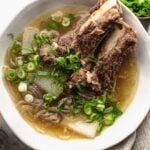
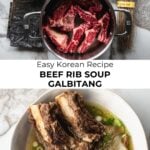
Make a classic Korean soup: Galbitang! Also known as Korean Beef Rib Soup, it’s a comforting and nourishing soup featuring meaty beef ribs in a savory broth. Serve with glass noodles, rice, green onion, and kimchi for a family favorite. YUM!

What is Galbitang?
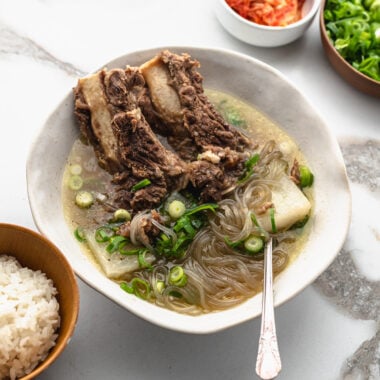
Galbitang is a comforting Korean soup featuring meaty beef ribs in a clear savory broth. Also known as Korean Beef Rib Soup, it’s served with a bowl of white rice, a shower of green onions, and a side of spicy kimchi. Cozy comfort food that will warm you up!
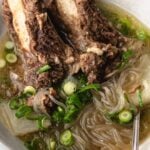
Korean Short Rib Soup is often served with chewy sweet potato noodles (dangmyeon). The clean taste of the clear broth, chewy glass noodles, and meaty ribs make it the perfect soup. A complete meal in one bowl.
Similar to Korean Oxtail Soup, Korean Beef Rib Soup gets its flavor from a long cooking time. Although it doesn’t require 8-24 hours like some other Korean soups (Seolleongtang etc.), it does take time. Simmering the bones creates a nutrient-rich broth with lots of collagen that’s good for your skin, bones, and overall digestive health. It takes some effort (and time!), but it’s mostly hands-off cooking time. A good weekend project.
Traditionally, Galbitang is made with Beef Short Ribs. Thick and meaty, this premium cut of meat produces an outstanding broth and tender, flavorful meat.
However, lately I’ve been using Beef Back Ribs with equally good results. They are easier to find (look for them at Costco), cook faster, and are more budget-friendly. Beef Back Ribs are not as meaty as Short Ribs, but the flavor is comparable.

Ingredients
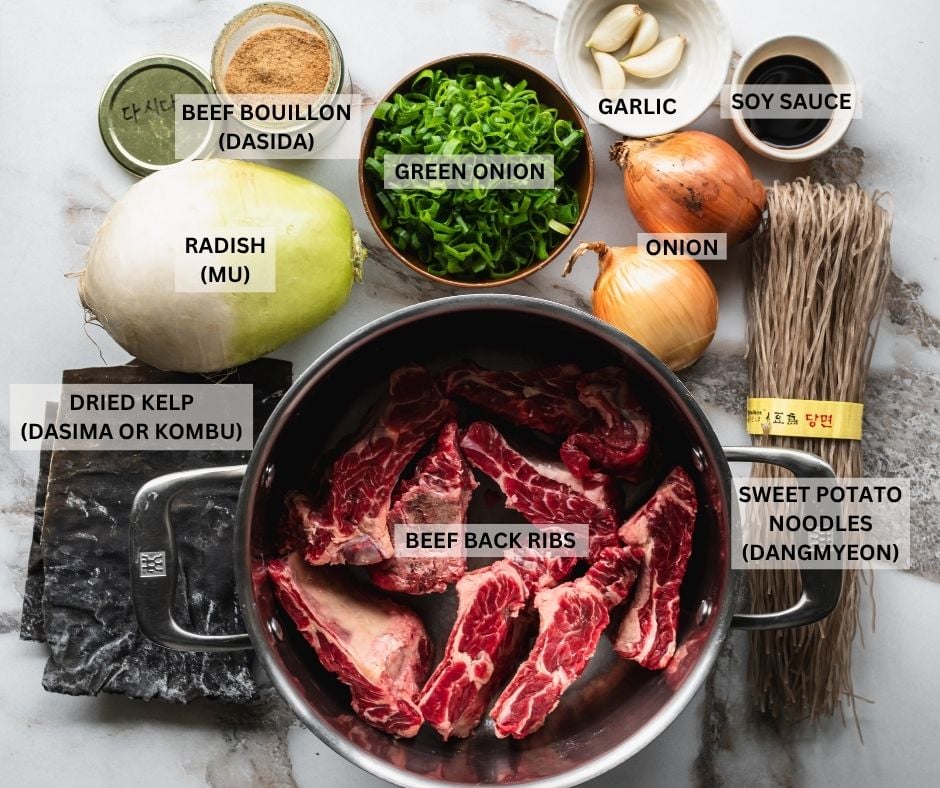
- Beef Ribs. Use either Beef Short Ribs or Beef Back Ribs. Look for meaty ribs that are well marbled. I do not recommend boneless short ribs as the flavor and texture will be different.
- Radish (Mu). Korean daikon. Large and plump with green coloring. You can also use Japanese daikon.
- Onion + Garlic. Essential aromatics. Add the onion while it cooks. Add the garlic
- Beef Bouillon Powder (Dashida). The secret ingredient for an extra flavorful and extra beefy flavored broth.
- Dried Kelp (Dashima or Kombu). *Optional. In Korean, it’s called Dashima. In Japanese, it’s called Kombu.
- Soy Sauce. Savory depth. If you have Guk Ganjang (Soup Soy Sauce), add less.
- Salt + Black Pepper. For seasoning. Freshly ground black pepper adds earthy freshness.
- Green onion. For serving.
- Sweet Potato Noodle (Dangmyeon). Gluten-free sweet potato noodles are chewy. A great addition.
How to make Korean Beef Rib Soup
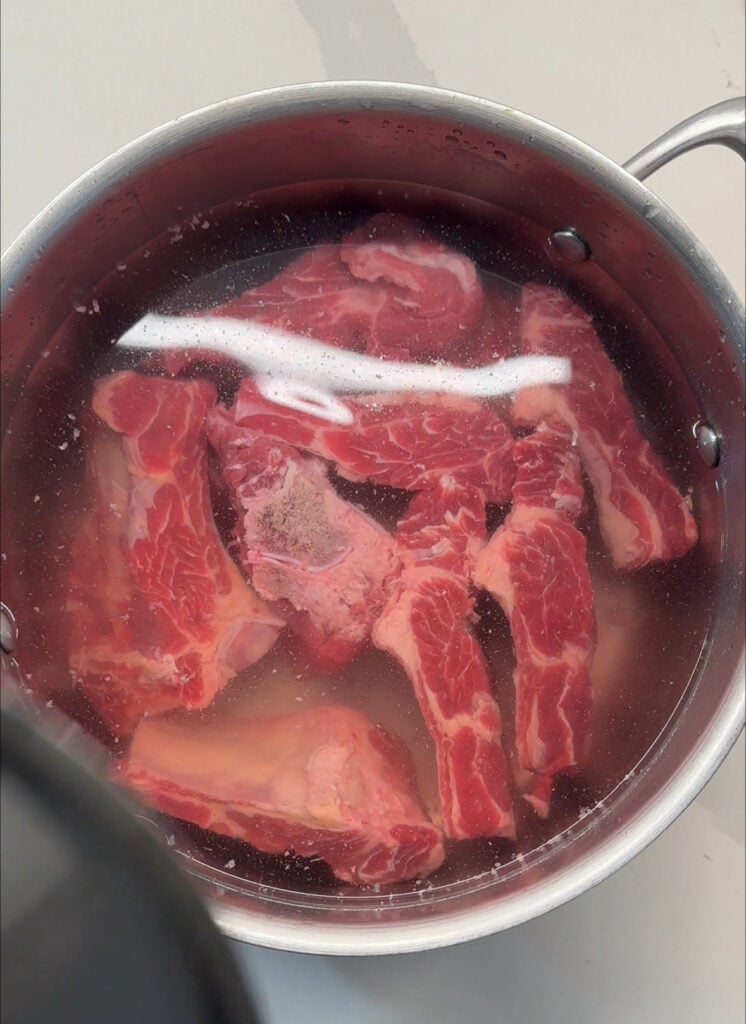
- Soak the beef bones. Add the beef bones to a stockpot. Add enough cold water to cover. Place a lid on top and set aside in a cool place (fridge or cold kitchen counter) to soak for 30 minutes. During this process, the blood will seep out of the meat and bones. Drain and add the beef bones back to the pot.
- Prep the vegetables. Peel the onion and trim the ends, making sure to keep it whole (for easier removal). Peel the radish and cut into two large chunks. Finely mince the green onion and set aside.
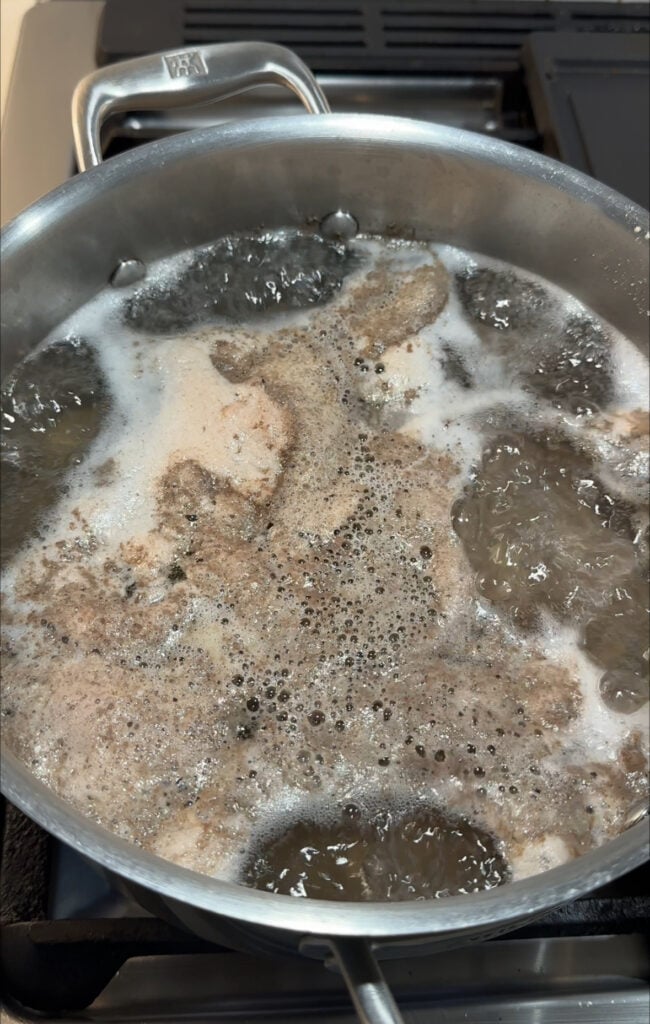
- Parboil the beef bones. Add enough cold water to cover the bones. Bring to a boil over high heat until the fat and scum rises to the surface, about 5 minutes.
- Drain and rinse. Using a colander, drain the bones. Rinse under cold water, using your hands to wipe away any residual fatty bits or scum clinging to the meat and bones. Also, make sure to wash the pot thoroughly.
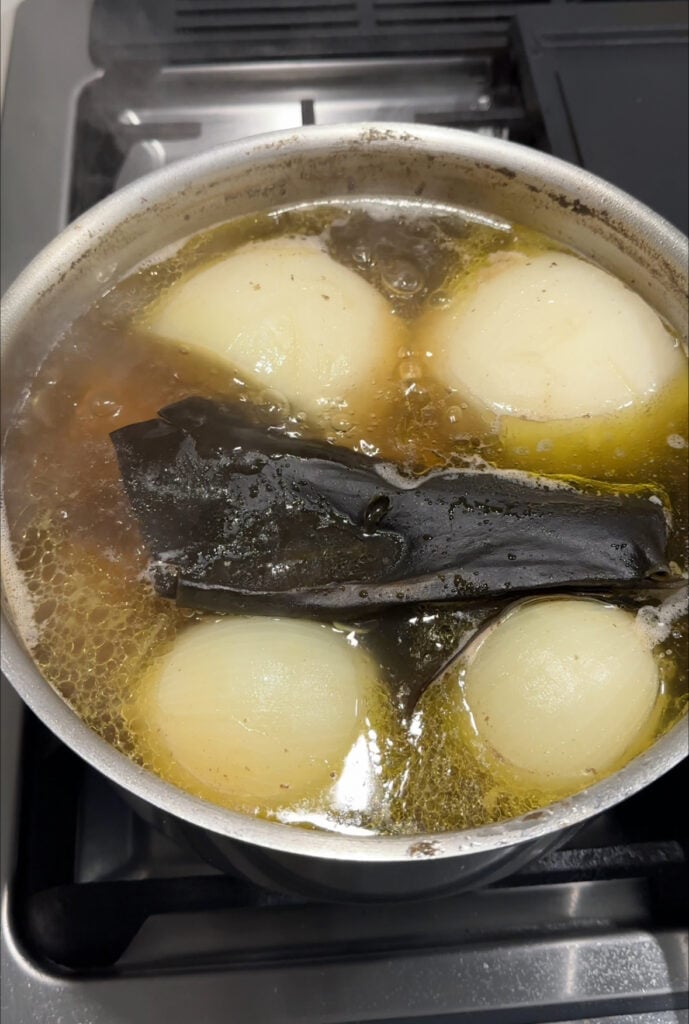
- Cook. Add the clean beef bones back to the clean pot. Add 13 cups of cold water, onion, radish (mu), dried kelp (dasima), soy sauce, and beef bouillon powder (dashida). Bring to a boil over high heat, then lower heat to medium. Remove any residual fat or scum that floats to the surface. Cook, uncovered, until the beef is tender but not yet falling off the bone, about 60 minutes. Cover and cook until the meat is falling off the bones, another 15-30 minutes depending on the thickness of the meat.
- Remove aromatics. When the meat is tender and falling off the bone, remove the onion, radish and dashima. Discard the onion and dashima. Reserve the radish and set aside.
- Optional: Refrigerate Overnight. For a less oily broth, refrigerate the soup overnight. The fat will harden and be easier to remove.
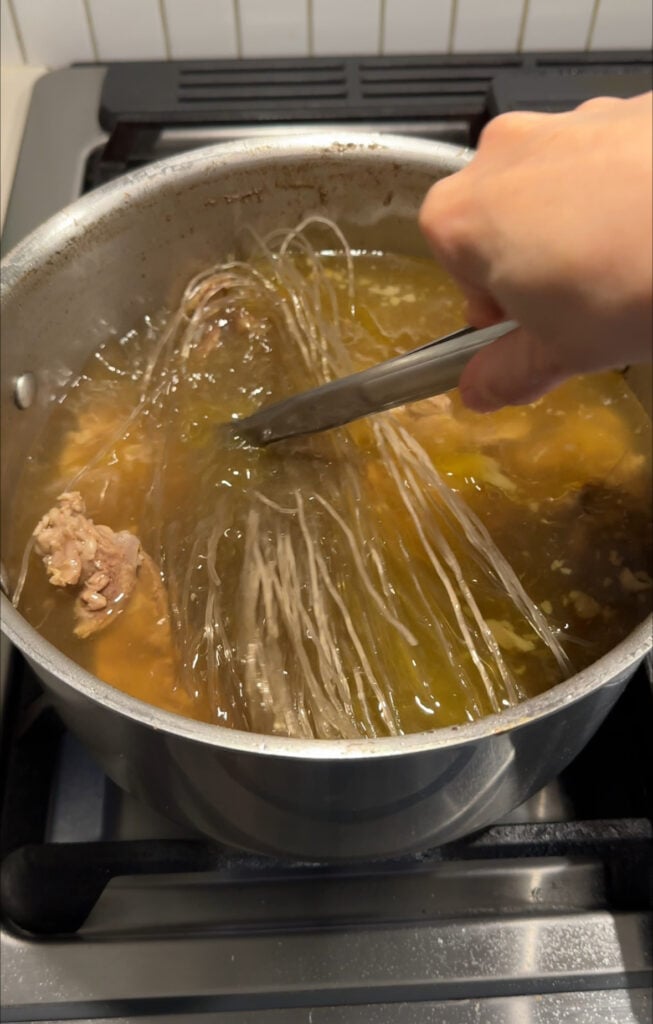
- Add Dangmyeon + Garlic. Add the sweet potato noodles directly into the soup. Add the minced garlic. Cook until the noodles tender yet slightly chewy, about 5-7 minutes.
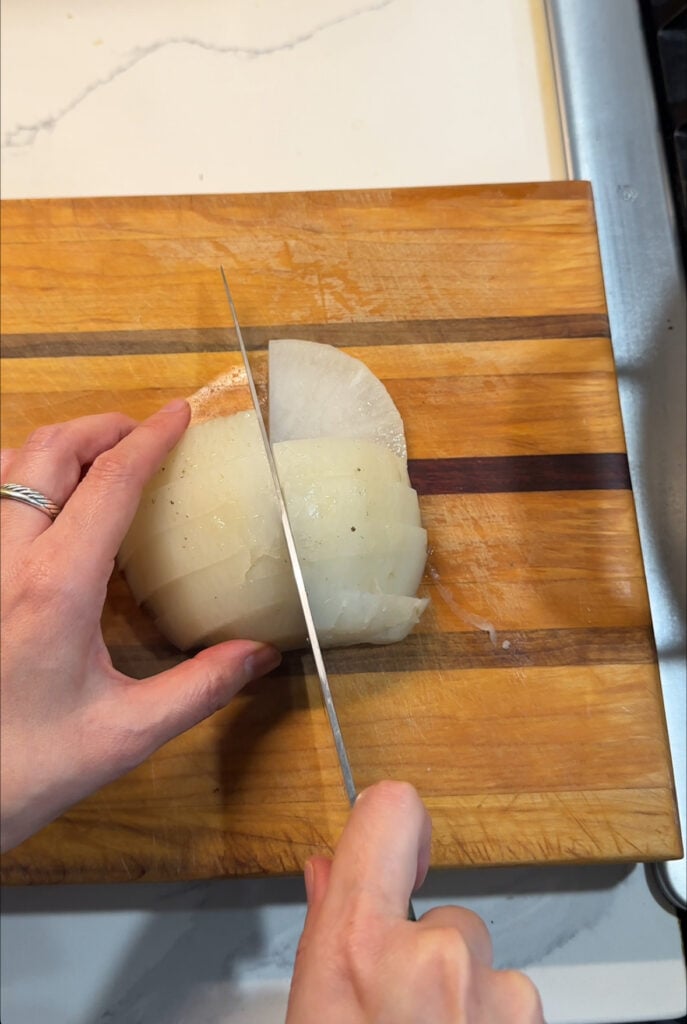
- Add cooked radish. While the Dangmyeon cooks, slice the cooked radish into thin 1/2-inch half moons. Add the radish pieces back to the soup pot.
- Taste and adjust seasoning. Taste the soup and adjust seasoning. Add more salt or a pinch or two of beef bouillon powder if needed.
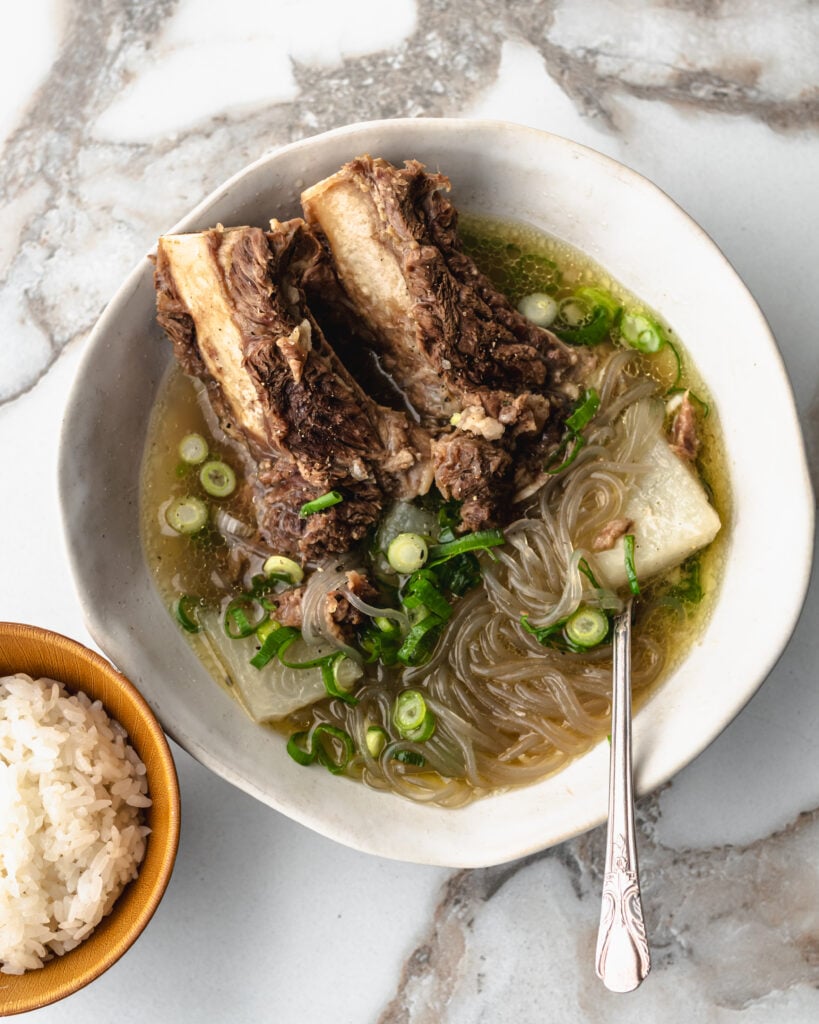
- Serve. Transfer the soup to individual soup bowls. For each portion, add 1-2 beef ribs, noodles, radish, and soup. Garnish with black pepper and green onion. Serve immediately with rice and kimchi. Enjoy!
PRO Tips
- Keep aromatics (onion + radish) big and chunky. For easier removal. Keep the onions whole and intact. Cut the radish into big chunks.
- Make sure to parboil the bones. In Korean cuisine, parboiling is an essential cooking technique that removes impurities and strong odors from meat dishes. Don’t skip this step! It will result in a clearer broth, better flavor, and less gamey-smelling soup.
- Cook noodles in batches. If you’re not eating the full 4 person portion, I recommend adding less noodles. For example, if I’m only eating 2 portions or the soup, I will add just enough noodles for 2 portions. Otherwise, the leftover noodles will absorb the soup and bloat enormously.
Serve with
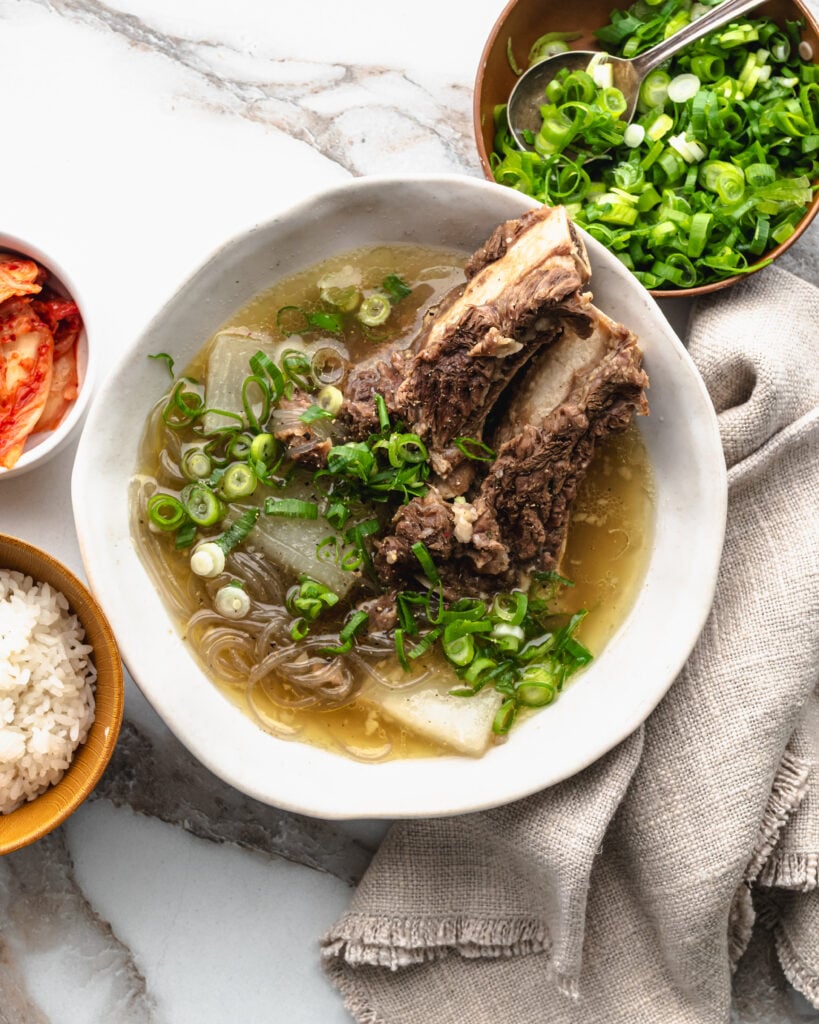
Serve Korean Beef Short Rib Soup with white rice or Korean Purple Rice. It’s also customary to serve a small bowl of green onions on the side so people can help themselves.
Also, add a side of kimchi or Kkakdugi for that spicy, acidic bite. Kimchi and Galbitang go very well together!
If you like, add a few other side dishes. I recommend Ssamjang Chili Peppers, Mu Sangchae, or Spicy Cucumber Salad (Oi Muchim).
Helpful Kitchen Tools
- Stock Pot. A big stock pot is an essential tool for making soup.
- Colander. To make draining the beef bones easier.
FAQ
These two cuts of beef are located in different sections of the cow. Beef Short Ribs are found on the lower part of the ribs and have a thick, heavy layer of meat on top. They are considered a premium cut because of their high fat content and rich marbling. Beef Back Ribs come from the upper back, near the shoulders. The meat is found between the bones, rather than on top. They are leaner and less meaty but the quality is still very good. As a bonus, they are much cheaper than beef short ribs.
Leftover soup can be stored in an airtight container in the fridge for 3-5 days. Make sure to remove the noodles from the soup and store them in a separate container. The noodles, if stored in the soup, will absorb the liquid and bloat enormously.
More Korean soup recipes
- Gamjatang (Spicy Pork Bone Soup)
- Yukgaejang (Spicy Beef Soup with Wild Vegetables)
- Kkori Gomtang (Oxtail Soup)
- Dak Gomtang (Chicken Noodle Soup)
For more soup inspiration, check out Cozy Korean Soups + Stews. If you’re new to Korean food, check out 10 Easy Korean Recipes.
Easy Korean Beef Rib Soup (Galbitang) recipe
Equipment
- Large Stockpot
- Colander
Ingredients
- 3 lbs Beef Short Ribs or Beef Back Ribs
- 2 small onions *or 1 large onion
- 400 grams Korean radish (Mu) *about 1.5 cups
- 1 piece Dried Kelp *also known as Dashima or Kombu
- 1 Tbsp Beef Bouillon Powder *also called Dashida
- 1 Tbsp Soy Sauce
- 13 cups water
- 4 cloves garlic, minced
- 1 bundle Sweet Potato Noodles *also called Dangmyeon
Garnish
- 1 bunch green onions, minced
- black pepper
Instructions
- Soak the beef bones. Add the beef bones to a stockpot. Add enough cold water to cover. Place a lid on top and set aside in a cool place (fridge or cold kitchen counter) to soak for 30 minutes. During this process, the blood will seep out of the meat and bones. Drain and add the beef bones back to the pot.
- Prep the vegetables. Peel the onion and trim the ends, making sure to keep it whole (for easier removal). Peel the radish and cut into two large chunks. Finely mince the green onion and set aside.
- Parboil the beef bones. Add enough cold water to cover the bones. Bring to a boil over high heat until the fat and scum rises to the surface, about 5 minutes.
- Drain and rinse. Using a colander, drain the bones. Rinse under cold water, using your hands to wipe away any residual fatty bits or scum clinging to the meat and bones. Also, make sure to wash the pot thoroughly.
- Cook. Add the clean beef bones back to the clean pot. Add 13 cups of cold water, onion, radish (mu), dried kelp (dasima), soy sauce, and beef bouillon powder (dashida). Bring to a boil over high heat, then lower heat to medium. Remove any residual fat or scum that floats to the surface. Cook, uncovered, until the beef is tender but not yet falling off the bone, about 60 minutes. Cover and cook until the meat is falling off the bones, another 15-30 minutes depending on the thickness of the meat.
- Remove aromatics. When the meat is tender and falling off the bone, remove the onion, radish and dashima. Discard the onion and dashima. Reserve the radish and set aside.
- Optional: Refrigerate Overnight. For a less oily broth, refrigerate the soup overnight. The fat will harden and be easier to remove.
- Add Dangmyeon + Garlic. Add the sweet potato noodles directly into the soup. Add the minced garlic. Cook until the noodles tender yet slightly chewy, about 5-7 minutes.
- Add cooked radish. While the Dangmyeon cooks, slice the cooked radish into thin 1/2-inch half moons. Add the radish pieces back to the soup pot.
- Taste and adjust seasoning. Taste the soup and adjust seasoning. Add more salt or a pinch or two of beef bouillon powder if needed.
- Serve. Transfer the soup to individual soup bowls. For each portion, add 1-2 beef ribs, noodles, radish, and soup. Garnish with black pepper and green onion. Serve immediately with rice and kimchi. Enjoy!
Notes
- Keep aromatics (onion + radish) big and chunky. For easier removal. Keep the onions whole and intact. Cut the radish into big chunks.
- Make sure to parboil the bones. In Korean cuisine, parboiling is an essential cooking technique that removes impurities and strong odors from meat dishes. Don’t skip this step! It will result in a clearer broth, better flavor, and less gamey-smelling soup.
- Cook noodles in batches. If you’re not eating the full 4 person portion, I recommend adding less noodles. For example, if I’m only eating 2 portions or the soup, I will add just enough noodles for 2 portions. Otherwise, the leftover noodles will absorb the soup and bloat enormously.