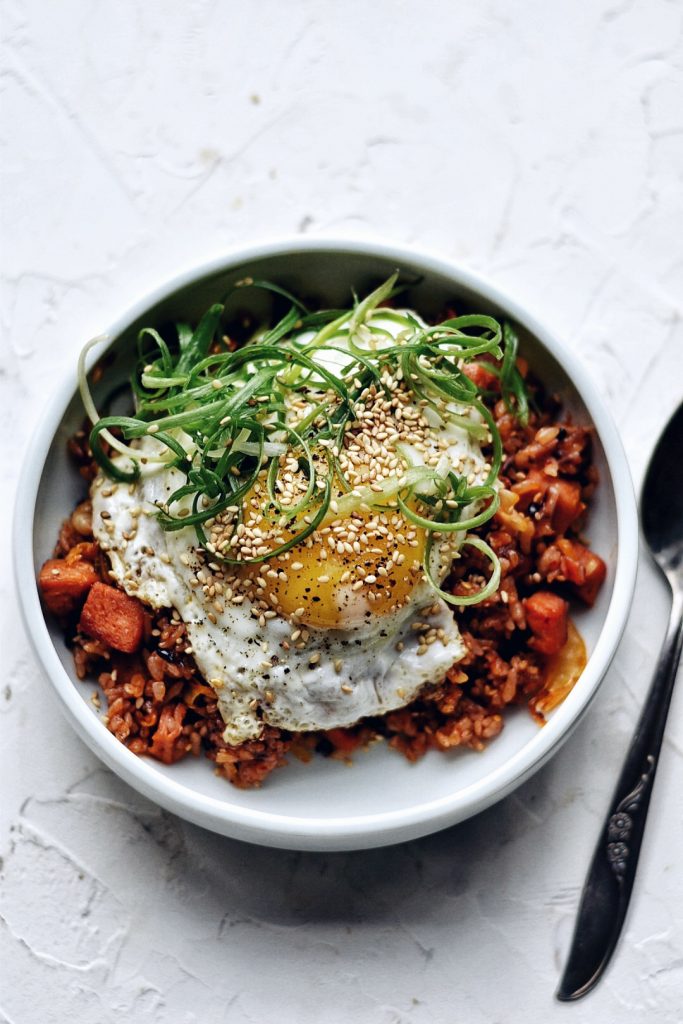
The best 15-minute recipe: Spam Kimchi Fried Rice! A classic Korean dish that’s easy, delicious, and quick to make. Leftover rice is flavored with kimchi and little cubes of salty Spam. Add a fried egg on top for the ultimate easy meal!

What is Spam Kimchi Fried Rice?
Spam Kimchi Fried Rice is a popular Korean dish made with Spam, kimchi, and rice. A quick meal or midnight snack, it’s an easy recipe made with minimal ingredients! Also called Kimchi Bokkeumbap, it’s quite tasty and satisfying with an egg on top.
The recipe works because Spam and kimchi taste good together. Spam adds porky richness and meaty flavor to kimchi. At the same time, kimchi’s acidity cuts through the fattiness of Spam. A culinary match that’s iconic in Korean cuisine.
You can add anything to Kimchi Fried Rice. But Spam is an easy way to make it extra special. An indulgent addition that is great for parties or special events. It can make an amazing 15-minute weeknight dinner. A little Spam transforms day-old rice into something truly special.
FYI, there are many different ways to make Kimchi Bokkeum Bap. Tuna Kimchi Fried Rice is made with canned tuna and has a leaner flavor. Cheesy Kimchi Fried Rice has a generous helping of gooey mozzarella cheese. And Kimchi Jumeok Bap is actually Kimchi Fried Rice rolled into snack-friendly rice balls. All different but all still very good!
Looking for another easy kimchi and rice meal? Try Kimchi Scrambled Eggs Rice Bowl for an even quicker weeknight dinner.
What is Spam?
Spam is a popular canned pork product made by Hormel Foods, a US company based in Minnesota. It’s also very popular in Korean cuisine.
After the Korean War (1950-53), the US army widely distributed Spam during its occupation. Although Koreans first cooked with Spam out of necessity, they quickly incorporated it into Korean cuisine and made it their own. For example, Budae Jjigae (Army Base Stew).
The fatty, salty flavor of porky Spam pairs especially well with Korean food! A little bit adds so much rich flavor. It’s frequently cooked in jjigaes (stews), stir fries, and even pan-fried with egg wash like a jeon.
Ingredients:
- Spam. A processed meat product that is salty and rich. Adds lots of flavor and umami. Regular Spam or Reduced Sodium Spam both work for this recipe.
- Kimchi. The main ingredient. Old kimchi is preferred! It will cook down into mellow deliciousness. Also, don’t forget to add some kimchi juice from the jar for more flavor.
- Rice. Day-old rice is preferred. Do not use hot rice! Freshly cooked rice will be too mushy. I recommend short grain rice (also called Sushi rice) or medium grain rice (Jasmine, Calrose). I don’t recommend long grain rice (Basmati or Carolina rice) as it will break apart when cooked. White rice is preferred but brown rice also works. You can also use cauliflower rice for a low carb dish.
- Fish Sauce. A sprinkle or two adds umami flavor.
- Sugar. Just a pinch to balance all the flavors.
- Sesame Oil. Add a drizzle of nutty aromatic sesame oil, right before serving.
- Green onions. Optional but adds freshness and color.
- Fried Egg. The Korean way to top any rice dish. A sunny side up egg is classic. Break the runny yolk with your spoon and let it drip all over the rice for extra flavor.

How to make Kimchi Bokkeum Bap with Spam
- Cube Spam. Choose what you like best: A large 1-inch dice will give you meaty big chunks. A small 1/4-inch dice will give you evenly distributed small bits of porky flavor.
- Cook Spam. Add diced spam to a skillet. Cook until crisp and slightly browned. There’s no need to add cooking oil — the rendered fat will seep out as it cooks.
- Cook kimchi. Add chopped kimchi and kimchi juice. Stir fry until caramelized, orange, and soft. Enhances all that kimchi flavor to a concentrated intensity.
- Add rice. Add cold, leftover rice to the Spam and kimchi mixture. Continue cooking, mixing well with the spatula.
- Add flavor boosters. Add a sprinkle or two of fish sauce. Add a pinch of sugar. Mix well.
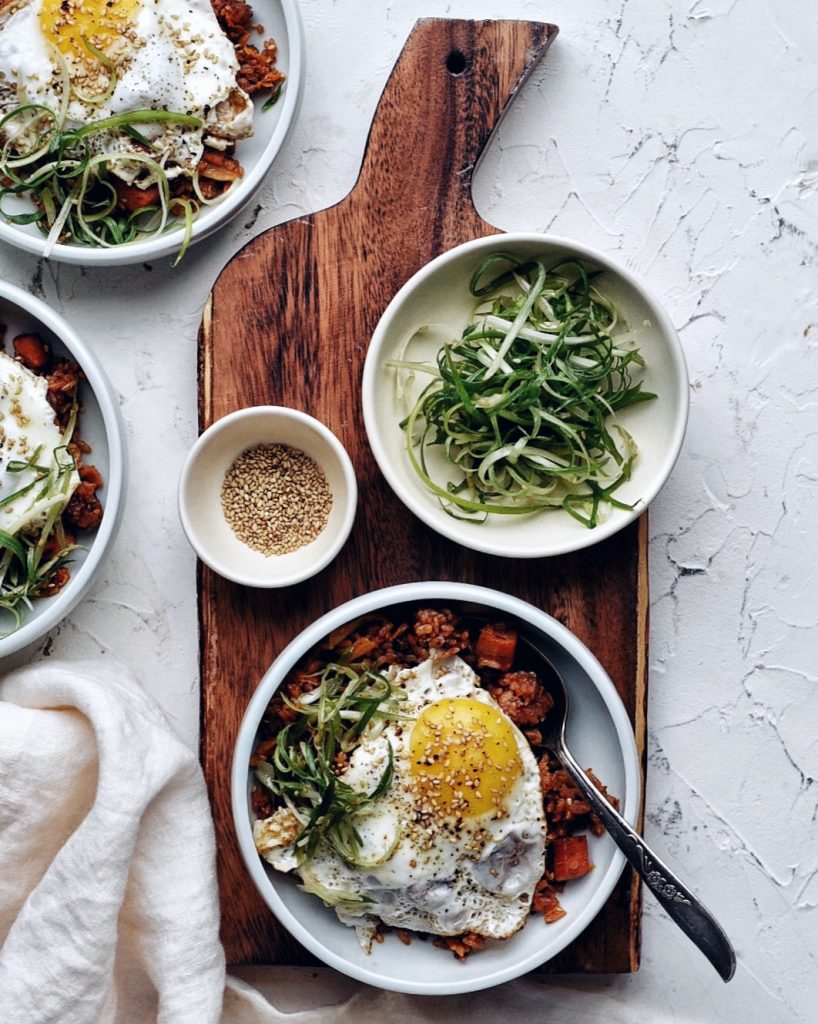
- Serve. Garnish with a fried egg, a drizzle of sesame oil, and green onions. You can also add sesame seeds, furikake, or sriracha. Enjoy!


PRO Tips:
- OLD Kimchi tastes best! For the best result, use sour kimchi that’s old and well-fermented. Fresh kimchi will not taste the same in this recipe. When cooked, old kimchi becomes mellow and deeply flavorful.
- Cut kimchi with scissors. For easy cleanup, transfer kimchi to a small bowl and snip with kitchen scissors. An easy Korean trick to avoid a messy cutting board and knife.
- Double for a larger portion. Spam Kimchi Fried Rice easily doubles and triples. Make for a potluck or large party.
- Taste and adjust flavor. As a fermented food item, kimchi continues to change in flavor as its ages. At the end of the cooking process, taste and adjust: if it tastes too salty or spicy, add a pinch of sugar. If it tastes bland, add a sprinkle of fish sauce.
Helpful Kitchen Tools:
- Large skillet or wok. A large skillet (or wok) helps to toss and move around the kimchi fried rice. You’ll need more room than you think! For Kimchi Fried Rice, I recommend a non-stick skillet (affiliate) or a well seasoned cast iron pan (affiliate).
FAQ
For fried rice recipes, the rice grains need to be hard, dry, and cold for best texture. Soft, freshly cooked rice is too soft and mushy.
If you don’t have leftover rice, simply cook rice as usual. Spread the hot, freshly cooked rice onto a sheet pan. Place in the fridge until cold and hard, about 30-45 minutes.
Yes, Kimchi Fried Rice is easy to make vegetarian. Simply leave out the Spam or use plant based Spam. Also, make sure to use vegetarian kimchi as it contains small amounts of fish, shrimp, and other seafood.
Store leftovers in an airtight container. Keeps in the fridge for 3-4 days.
More recipes with kimchi
- Kimchi Jjigae (Kimchi Stew) with Pork Belly
- Braised Kimchi (Kimchi Jjim)
- Loaded Kimchi Fries
- Easy Kimchi Pancakes
Spam Kimchi Fried Rice recipe
Equipment
- Large non-stick skillet
Ingredients
- 1/2 package Spam, cubed (use the whole can for a meatier dish)
- 1 1/2 cups kimchi + kimchi juice (old, mature kimchi preferred)
- 1 Tbsp gochujang (Korean fermented chili paste)
- 3 cups cooked rice (cold, at least 1 day old; short or medium grain preferred)
- 1-2 Tbsp sesame seeds
- 1/2 tsp sugar
- 1-2 tsp fish sauce (to taste)
Garnish:
- 1 fried egg
- 1 tsp sesame seed oil
- 1 green onion (chopped)
Instructions
- Cook Spam. Cube Spam into 1/4-inch cubes. Heat non-stick pan on medium heat. Add cubed Spam and toss until crispy looking on the edges, about 2-3 minutes.
- Cook kimchi. Add kimchi and a little bit of kimchi juice. Mix thoroughly with Spam and cook until the flavors meld, about 5 minutes. The color of the kimchi should change from red to golden and yellow-orange.
- Add rice. Add cold rice and sesame seeds. Break up with a wooden spoon (or potato masher) until no clumps remain. Mix thoroughly with Spam and kimchi mixture until well combined, about 5 minutes. Add sugar and fish sauce. Taste and add a sprinkle of salt, if needed.
- Serve. Remove from heat. Transfer to a serving platter or divide between two bowls. Add a small drizzle of sesame seed oil, and green onion. Top with a fried egg and sriracha, if desired. Enjoy!


Pingback: Asian Rice Bowls | The Subversive Table
Pingback: Basic Dutch Pancake - The Subversive Table
Pingback: Kimchi Queso Dip - The Subversive Table
Pingback: Kimchi Anthropology: Origins - The Subversive Table
Pingback: Budae Jjigae - The Subversive Table
Like!
Yes! I’ve been waiting for this! Looking forward to more Korean dishes!