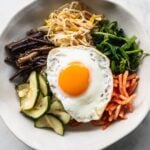
Learn how to make a Bibimbap bowl at home! Once you understand the basic formula, you can make a Korean Rice Bowl with almost anything you have in the fridge. Keep it traditional with seasoned vegetables and Korean beef. Or make it vegetarian with tofu and mushrooms. Or use leftover vegetables, kimchi, and whatever protein you have on hand.

What is Bibimbap?
In Korean, Bibimbap means “mixed rice.” It’s a Korean rice bowl featuring a serving of rice, a variety of colorful vegetables, protein and a fried egg on top. Add Gochujang sauce and a drizzle of sesame oil for a complete meal that’s filling, delicious and healthy.
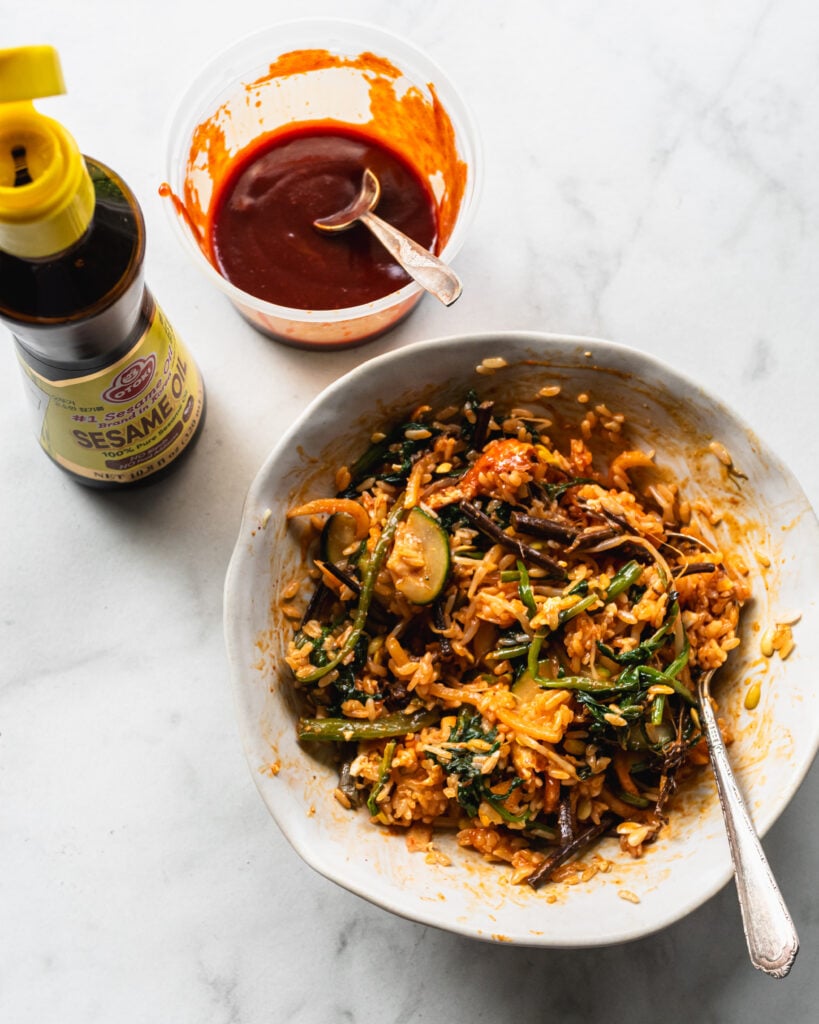
The ingredients are arranged on top of rice in separate sections. Then everything is mixed together right before eating. That’s the important part of Bibimbap: the MIXING.
Mixing ensures that every bite is flavorful. Mixing also combines all the different flavors and textures. An efficient and delicious way to enjoy a meal!
There are many ways to make Bibimbap. The ingredients can vary depending on season, region, occasion and what’s available in your fridge. All to say, there’s no one right way to make Korean Rice Bowls.
How to Build a Korean Rice Bowl
Think of Bibimbap as a formula rather than a hard and fast recipe. There are many ways to eat and enjoy it! Some tips to enjoy Korean Rice Bowls at home:
Start with Rice
Rice is the foundation of a Bibimbap Bowl. Don’t skimp on the amount. A full serving is needed for the right texture and comfort factor.
For the most traditional texture, use Korean or other short-grain white rice. It’s slightly sticky which makes it easier to mix with other ingredients. All the sauce and veggies cling to the rice grains, making every mouthful satisfying and comforting.
You can also use:
- Brown Rice
- Korean Purple Rice
- Multigrain Rice
- Leftover Rice
- Cauliflower Rice (or another variation)
- Quinoa
I don’t recommend long grain rice (Basmati or Carolina Gold, etc.) as the texture will be too fluffy and soft.


Choose Your Vegetables
Traditional Bibimbap includes several different vegetables. They are cooked and seasoned individually.
Some common additions:
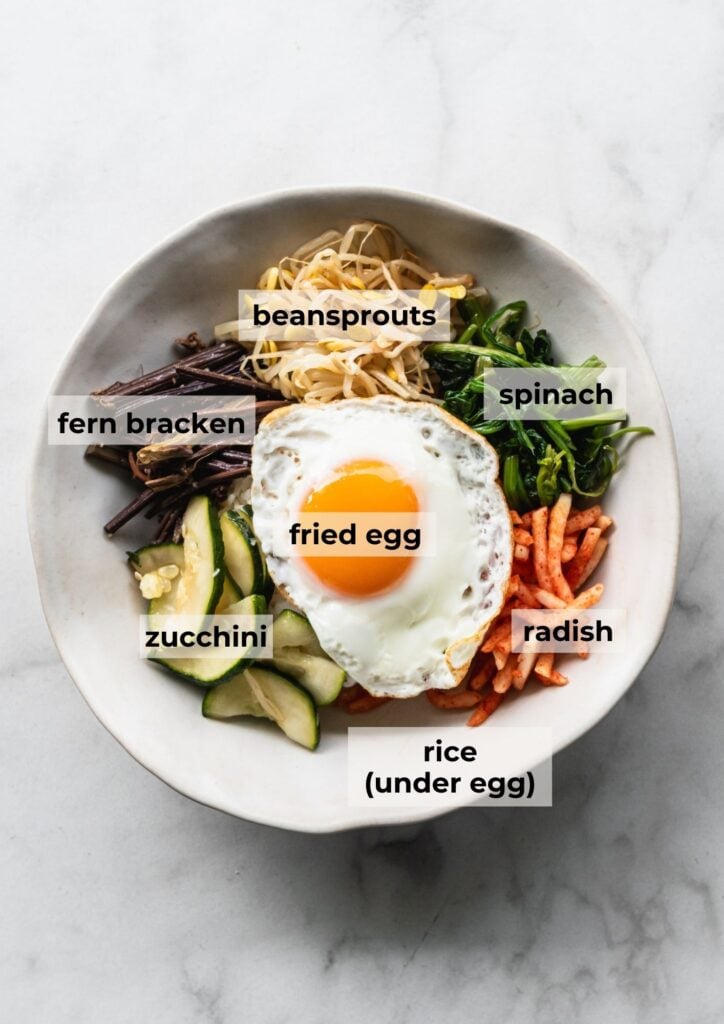
- Spinach
- Bean Sprouts
- Carrots
- Zucchini
- Mushrooms
- Fernbrake (Gosari)
- Radish (Mu Sangchae)
- Kimchi
- Salad Greens (non-cooked)
- Corn
You don’t need to use all of them. But I recommend at least 2 or 3 vegetables.
For the vegetables, it’s common to blanch or lightly stir fry with soy sauce (or salt), sesame oil and pinch of sugar. But you can also add certain vegetables raw.
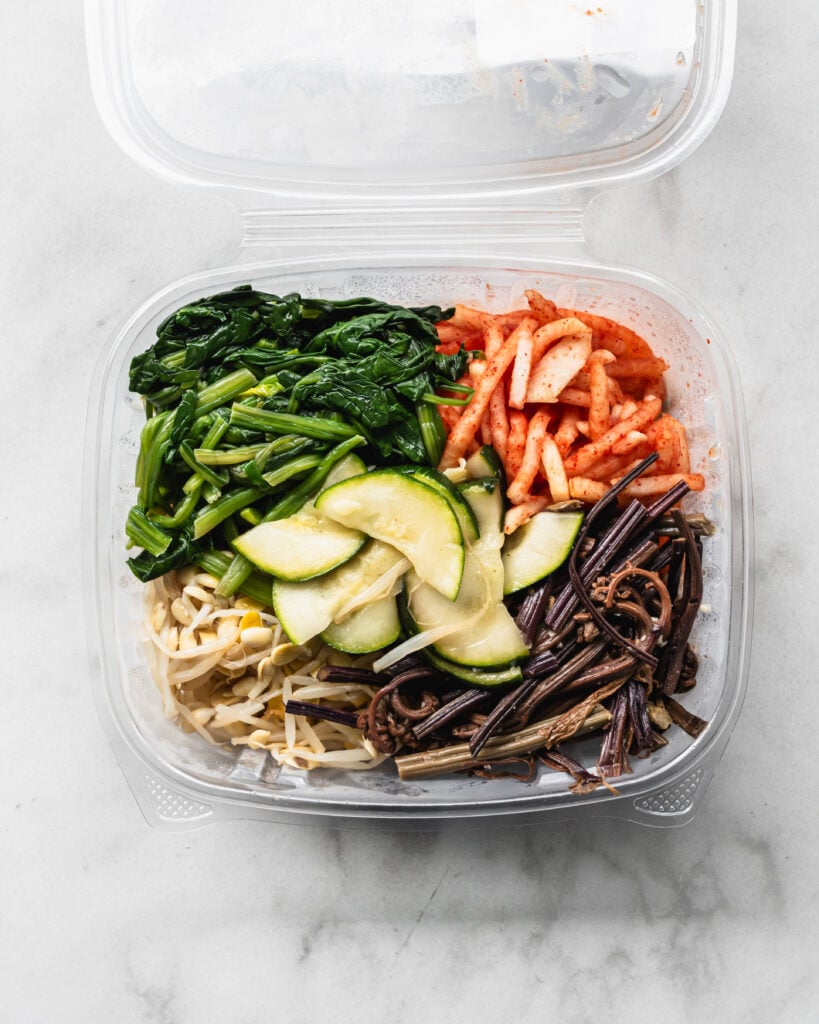
At Korean restaurants, you’ll often see a specific combination of colorful vegetables. But at home, it’s more common to use up whatever vegetables or banchan are in your fridge. Look for flavor combinations that complement each other.
PRO Tip: Korean Grocery Stores often sell an assortment of seasoned vegetables for Bibimbap. Look in the prepared foods section where you’ll find a variety of vegetables sold in one container.
Add Protein
Bibimbap can be made with meat, protein, seafood, or tofu. Or no protein at all.
Some options:
- Traditional Bulgogi (thinly sliced beef)
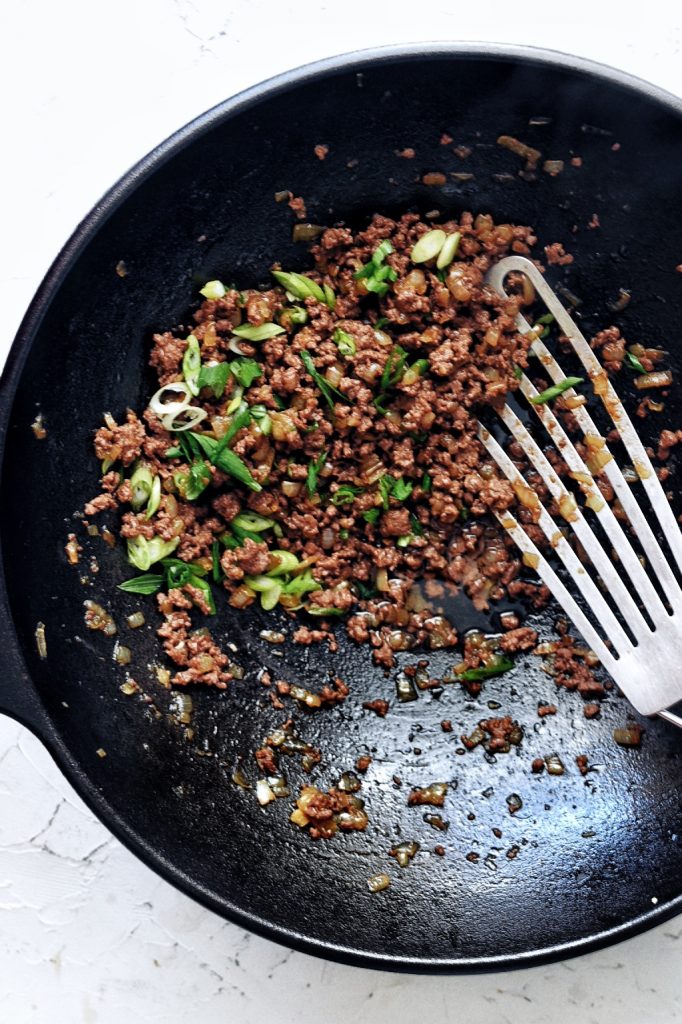
- Ground Beef Bulgogi
- Chicken Bulgogi
- Spicy Gochujang Chicken
- Canned Tuna
- Tofu
- Fish Cakes (Eomuk Bokkeum)
- Wanja Jeon (Korean Beef Patties)
- Leftover Rotisserie Chicken (shredded)
- Leftover meat of any kind
- Fried Eggs


PRO Tip: the easiest protein to add is fried eggs. Keep the egg yolks runny to create a delicious sauce that coats everything.
A regular portion is 1 sunny side up fried egg per serving. But if I’m hungry, I will add 2 or even 3 eggs.
If you don’t like runny eggs, add scrambled eggs or fried eggs with hard yolks. Bibimbap is customizable so make it suit your palate.
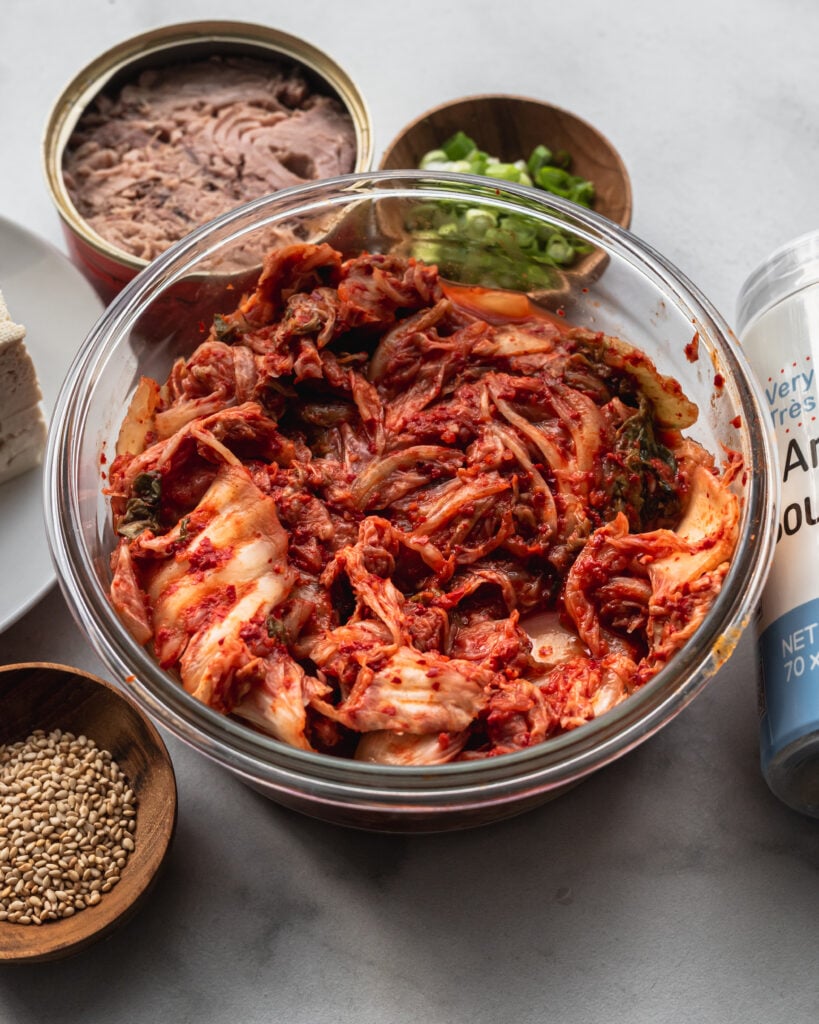
Add Kimchi (Optional)
Kimchi can be included as a vegetable. But I’m also including it as a separate category because its fermented nature adds another flavor element.
Kimchi, or any other pickled vegetable, can add lots of spice and acidity. Changes up the rice bowl entirely.
There are many different kinds of kimchi (over 200!) and many of them taste very good with Bibimbap. For example, Yeolmu Bibimbap features Yeolmu Kimchi which is a kind of kimchi made from the leafy greens of young radish.
Make Bibimbap Sauce
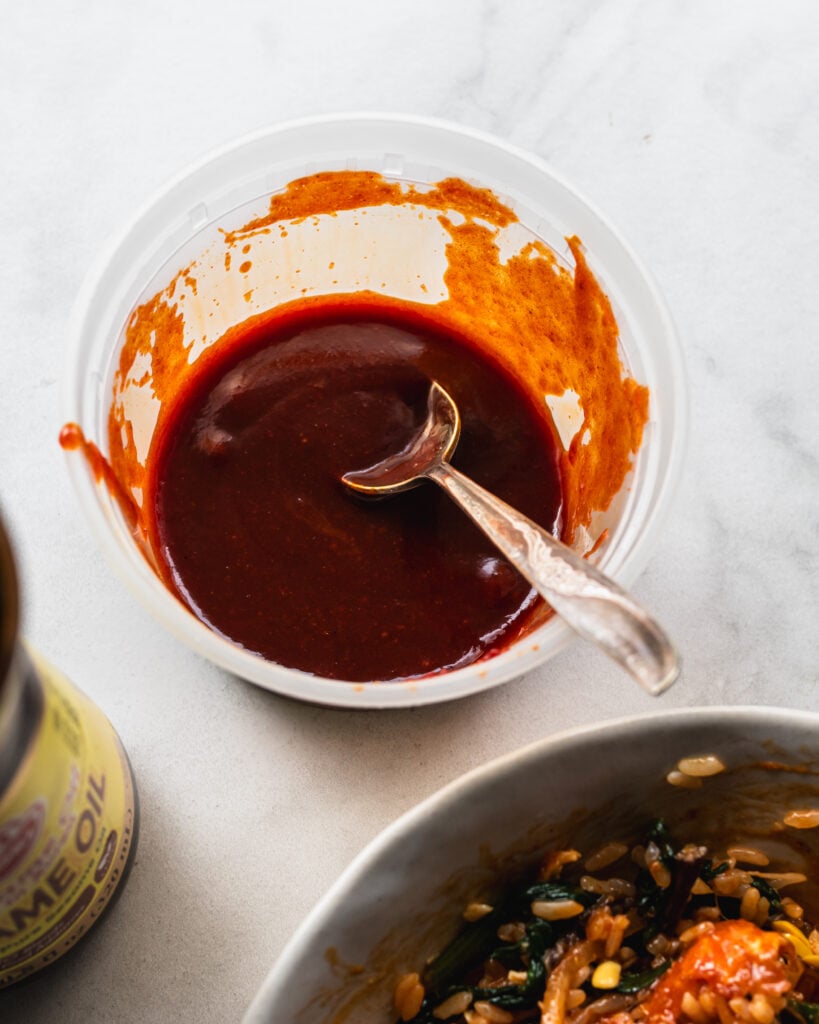
The flavor element that ties everything together: BIBIMBAP SAUCE! Add as much or as little as you like.
Fiery, bright red Gochujang Sauce is classic. In Korean, it’s called Cho Gochujang (cho means vinegar) because the added vinegar makes it tangy and pourable. It’s made with a few ingredients: gochujang, sesame oil, sugar and vinegar.
Or, you can add a scoop of Gochujang paste straight from the tub. When I’m in a rush and don’t want to be bothered by making a separate sauce, that’s what I’ll do.
Other options: You can also add either Ssamjang (soybean paste + gochujang paste) or Yangnyeom Jang (seasoned soy sauce). But you definitely need some kind of sauce to flavor the rice bowl.
PRO Tip: Add the sauce gradually, in stages. First, add a big scoop. Then, after mixing everything together, taste and add more sauce if you like.
Add Toppings + Finishing Touches
Finish your Bibimbap rice bowl with a few extra touches:
- Sesame Oil
- Crushed Nori (adds umami)
- Sesame Seeds (add crunchy texture)
- Green onions or Scallions
- Chopped fresh chilies
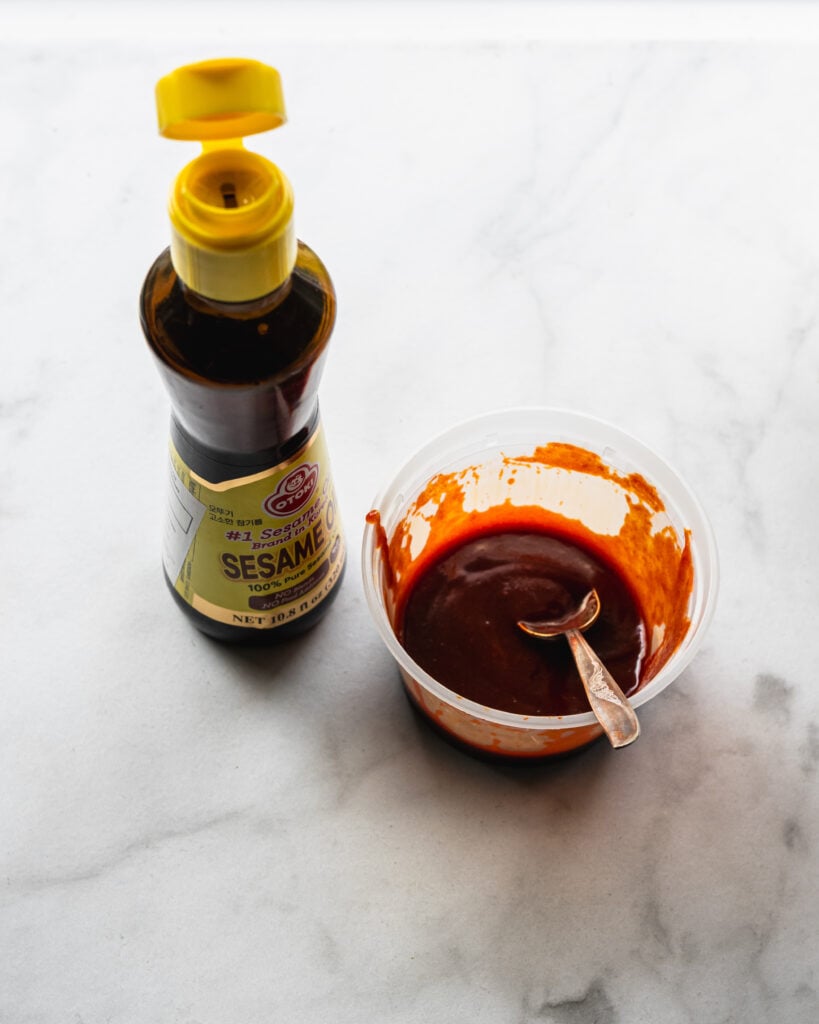
You don’t need to add all of them. But at the very least, include a drizzle of Toasted Sesame Oil. Add right before serving for the best flavor and aroma. And to make mixing easier.
The Korean Bibimbap Formula
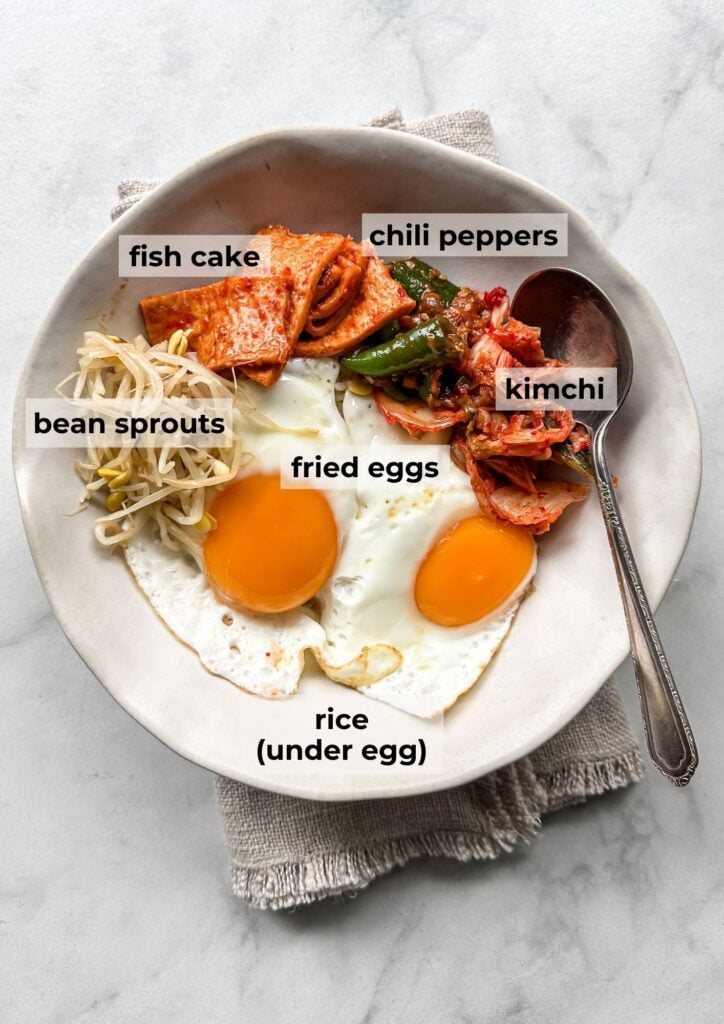
The basic formula for building a Korean Bibimbap Bowl:
Rice + Vegetables + Protein + Sauce + Toppings
The beauty of this formula is that you don’t have to make everything from scratch.
Have leftover spinach? Add it. A few spoonfuls of kimchi? Add it. Leftover bulgogi from dinner? Even better. Some mushrooms that need to be cooked? Saute them and add to the bowl.
Also, Bibimbap is highly customizable. Add what you like and what’s in your fridge.
Bibimbap is a great example of how Korean home cooking can be structured without being rigid. Once you understand the Bibimbap formula, you can make it your own.
How to serve
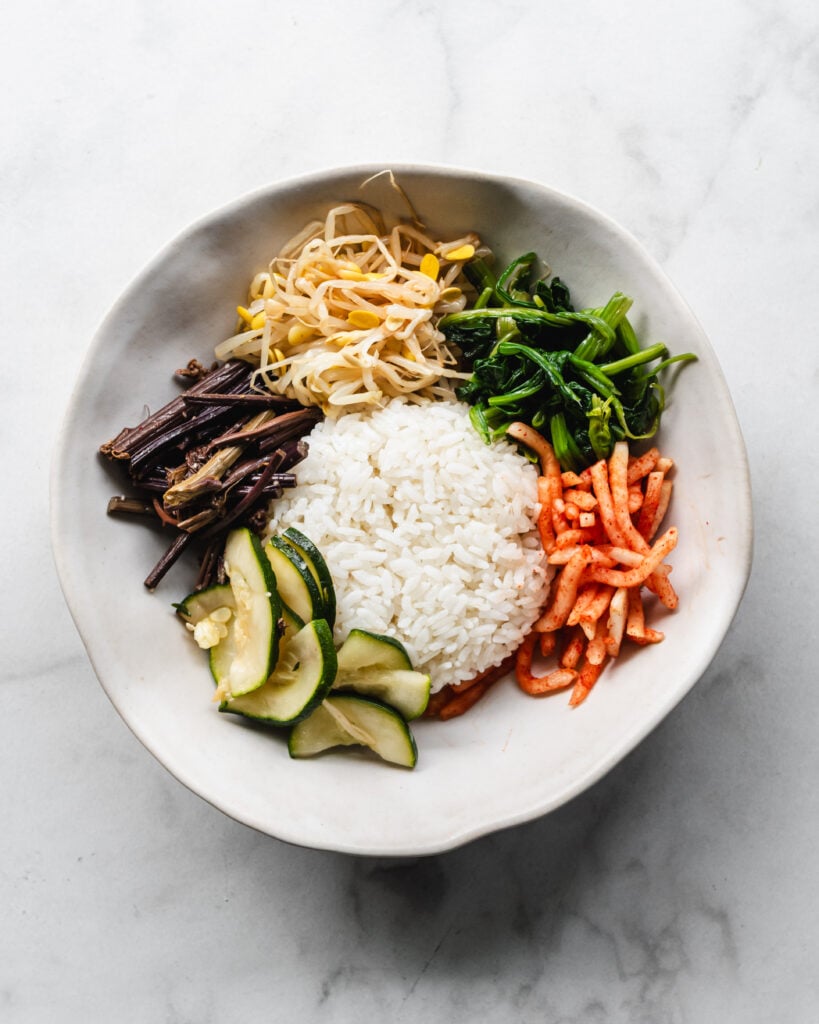
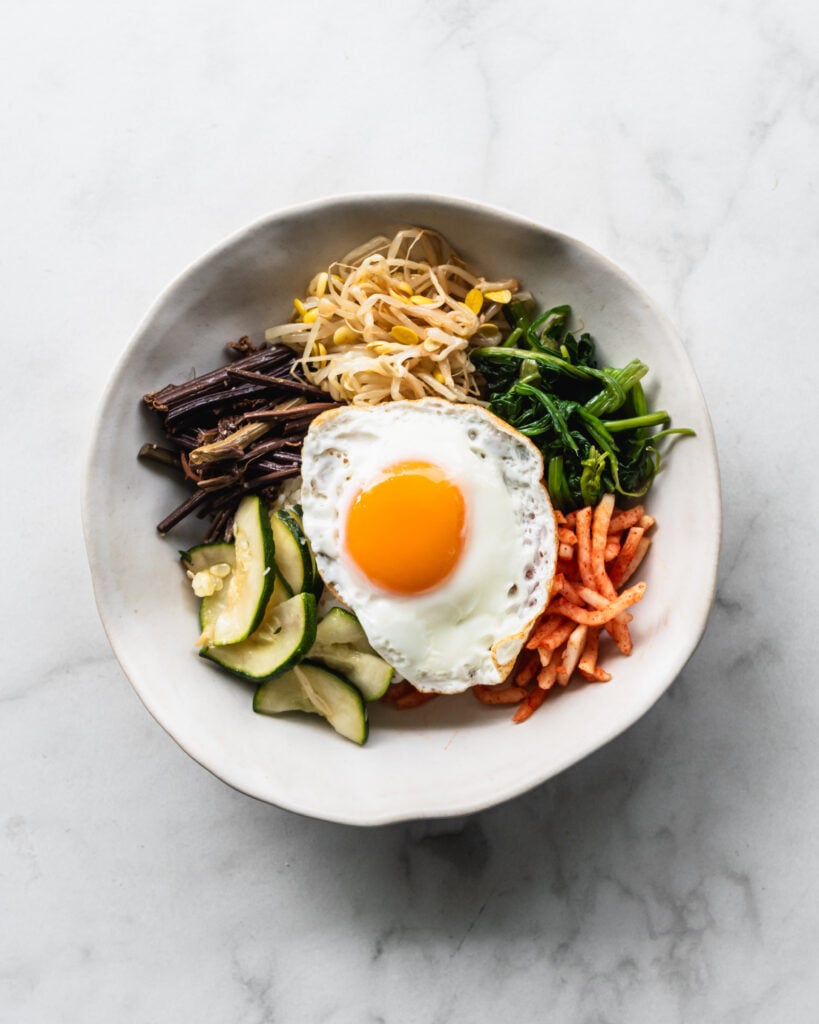
For a pretty presentation, arrange the rice in the middle. Add the vegetables and protein around the rice. Add the fried egg on top. Finish with Bibimbap Sauce and a drizzle of sesame oil.
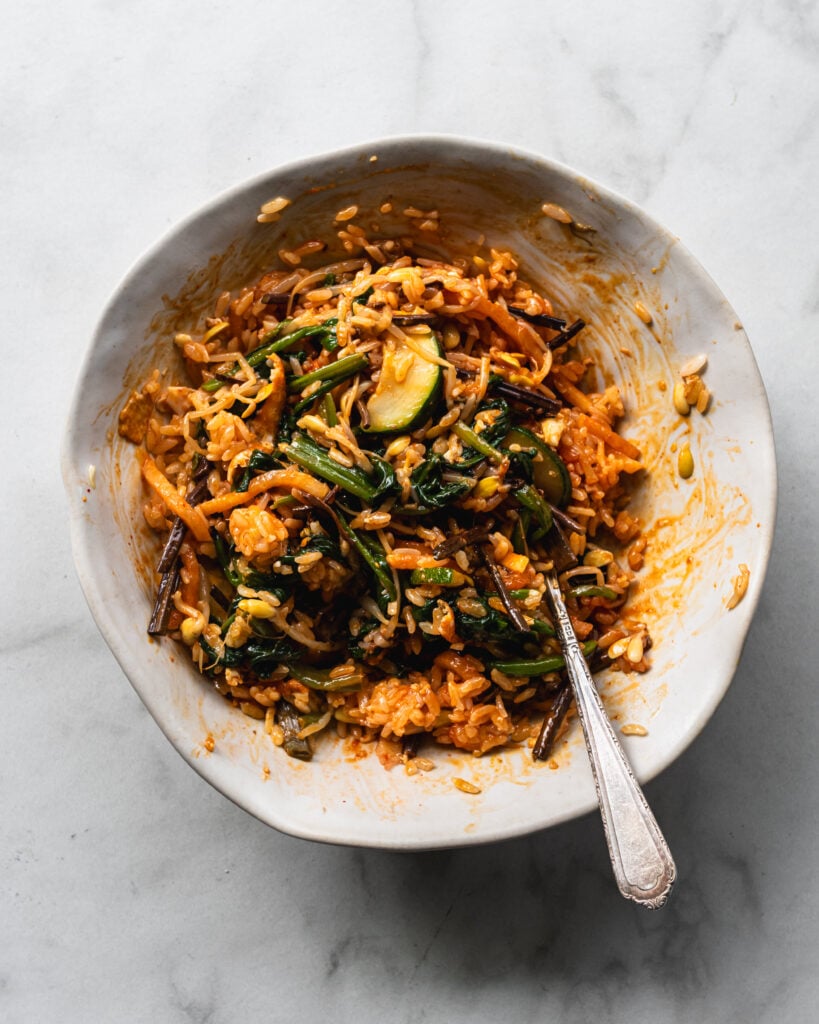
Then mix everything together just before eating. Taste and adjust seasoning, adding more sauce or sesame oil if needed.
Don’t be afraid to really mix it! The goal is for the sauce, rice, vegetables and other ingredients to be coated in sauce. Every bite should have a little bit of everything.
And be sure to serve in a big bowl with a spoon. Sometimes, Koreans will pile everything into a stainless steel bowl for easy mixing and eating.
Easy Combinations to Try
Once you know the formula, try different combinations based on what you like.
A few options:
Classic Beef
Rice + Bulgogi + Beansprouts + Spinach + Radish + Gochujang Sauce + Fried Egg
Vegetarian
Rice + Tofu + Mushrooms + Fern Bracken (Gosari) + Zucchini + Yangnyeom Jang
Spicy Pork
Rice + Spicy Pork (Jeyuk Bokkeum) + Kimchi + Gochujang Sauce + Fried Egg + Crushed Nori
Leftover Chicken
Rice + Rotisserie Chicken + Soft Bibb Lettuce + Shredded Carrots + Yangnyeom Jang
More Bibimbap Recipes
Seasonal and regional inspiration:
- Bomdong Bibimbap (Spring Cabbage Bibimbap)
- Dolsot Bibimbap (Stone Bowl Bibimbap)
- Yeolmu Bibimbap (Young Radish Kimchi Bibimbap)
- Beosot Bibimbap (Mushroom Bibimbap)
- Yukhoe Bibimbap (Raw Beef Bibimbap)
- Hwe Dupbap (Sashimi Bibimbap)
Modern rice bowls:


Can you make Bibimbap with leftovers?
Yes, absolutely!
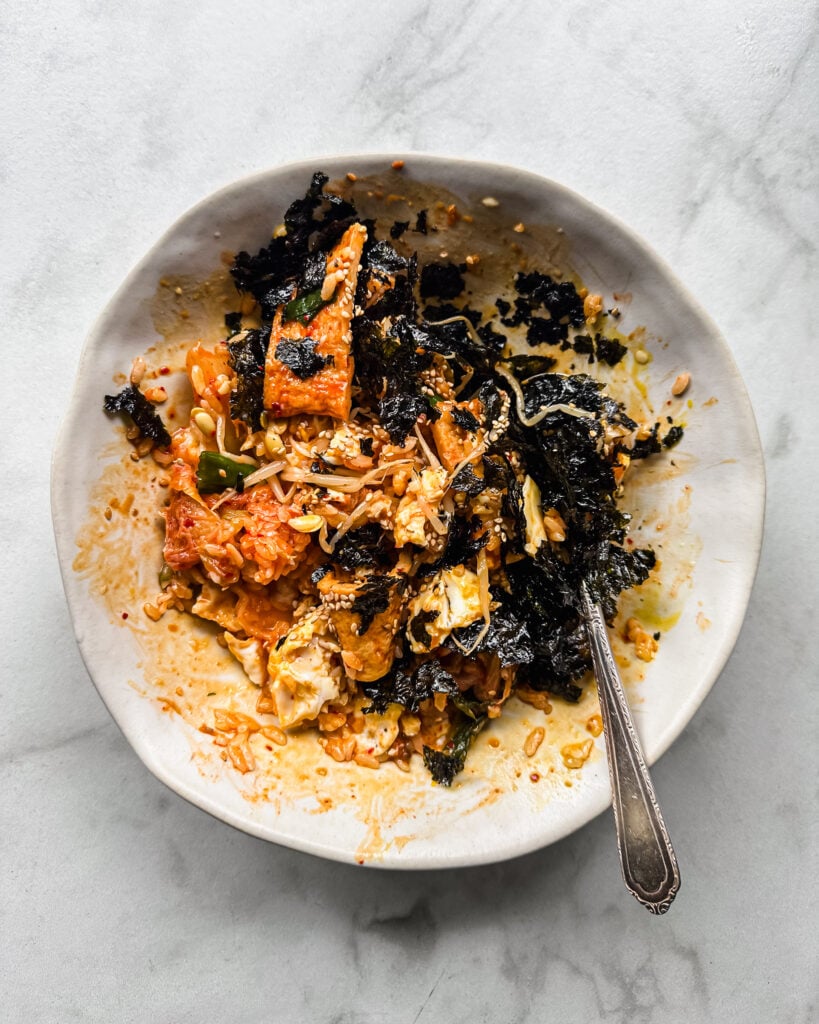
In fact, Bibimbap is the Korean way of making a meal out of leftovers. A good way to stretch the banchan in your fridge by adding rice, fried eggs, sauce and sesame oil.
About 90% of the time, I make Bibimbap with leftovers from the fridge. The key is to create a combination that tastes good together and with a variety of textures.
Make it a complete meal
Add a side soup and make it a complete meal. Some suggestions:
Bibimbap FAQ
Classic Beef Bibimbap is made with rice, bulgogi, seasoned vegetables, gochujang sauce and a fried egg. The vegetables can vary but can include: carrots, bean sprouts, spinach, mushrooms, fern bracken (gosari) and zucchini.
Yes. Use tofu, mushrooms, eggs, and a variety of seasoned vegetables for a satisfying vegetarian bibimbap bowl.
Yes. Bibimbap is meant to be mixed before eating. Mixing the ingredients together distributes the sauce throughout the rice and combines all of the different flavors and textures.
You can prepare the individual ingredients ahead of time and assemble the bowl when you’re ready to eat. Keep the rice, vegetables, protein, and sauce separate until serving for the best texture.
Deopbap is rice topped with a protein (for example, bulgogi or spicy pork). The bowl is eaten with a spoon and does not need mixing first. For example Tuna Deopbap, which is scooped out